
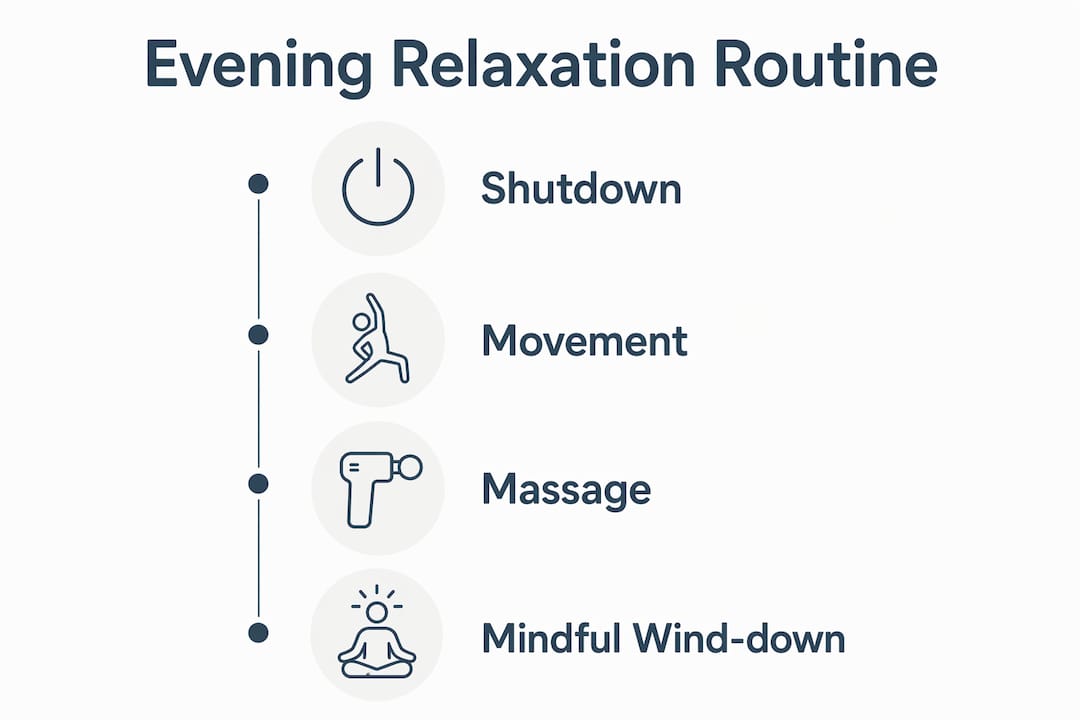
The best evening relaxation routine after work is a structured 30-minute reset ritual that helps busy professionals signal to their nervous system that the workday is over. This routine combines four clear phases: disconnecting from work, gentle movement, targeted touch therapy, and a mindful wind-down. Each phase builds on the next to reduce stress hormones, ease muscle tension, and prepare the body for quality sleep. Research supports that consistent evening sequences improve sleep quality within two weeks. Wellthious designs its wellness tools to fit naturally into each of these phases.
What is the best evening relaxation routine after work?
The best evening relaxation routine after work follows a consistent sequence rather than a rigid clock. Busy professionals benefit most from a structured order: disconnect, physical reset, and calming cue. That sequence matters more than the exact time you start it.
A well-structured routine typically spans 30–60 minutes and works across four phases. The first five minutes focus on shutting down work mentally and physically. The next five minutes involve light movement. Minutes 10–15 center on targeted muscle and scalp relief. The final phase, minutes 15–20, covers mindful activities that prepare the brain for sleep. Routine phases like these create environmental and physical cues that require little willpower once the habit is set.
The standard clinical term for this practice is sleep hygiene, which covers all behaviors and environmental factors that influence sleep quality. The phrase “evening relaxation routine” describes the practical, daily version of sleep hygiene that you can build into your schedule without clinical support.
How to disconnect from work and start your evening recovery (0–5 minutes)
The first five minutes of your evening are the most important. A soft shutdown ritual that shrinks the job’s mental space aids nervous system downshift. Without this step, work stress leaks into personal time and delays relaxation by hours.
A soft shutdown includes three concrete actions:
- Close all work tabs and apps. Visual clutter keeps your brain in problem-solving mode.
- Write tomorrow’s top three tasks. Externalizing unfinished thoughts stops them from looping in your head.
- Put work materials away physically. Physical rituals like this create stronger psychological boundaries than mental effort alone.
After the shutdown, drink a full glass of water. Hydration after work supports physical recovery and relaxation by aiding metabolism and reducing muscle tension. Your body loses water throughout the workday, and even mild dehydration raises cortisol levels.
Change your clothes. This single action functions as a physical reset cue. Your brain associates work attire with alertness. Switching to comfortable clothing signals a shift in mode. Dim the overhead lights in your main living space at the same time. Bright overhead lights delay natural melatonin release, so reducing light intensity early gives your body a head start.
Pro Tip: Set a recurring phone alarm labeled “Shutdown” for the same time each evening. The alarm acts as an external cue that removes the decision from your hands entirely.
Why gentle movement helps you unwind after work (5–10 minutes)
Light physical activity after a sedentary workday activates the parasympathetic nervous system, which is the body’s rest-and-digest state. A short walk or five minutes of stretching is enough to shift your physiology away from the stress response. Vigorous exercise near bedtime has the opposite effect, raising core temperature and cortisol, so keep this phase gentle.
Focus on the areas that carry the most tension from desk work:
- Neck rolls: Slowly drop your chin to your chest, roll to the right, back, and left. Repeat three times each direction.
- Shoulder shrugs and rolls: Lift both shoulders to your ears, hold for two seconds, then release. Roll them backward five times.
- Seated spinal twist: Sit upright, place your right hand on your left knee, and rotate gently to the left. Hold for 20 seconds per side.
- Standing forward fold: Stand with feet hip-width apart, hinge at the hips, and let your arms hang. Hold for 30 seconds to release lower back tension.
A five-minute walk outside adds an extra benefit. Natural light exposure, even at dusk, helps regulate your circadian rhythm. If going outside is not possible, walking slowly around your home for five minutes still activates the parasympathetic response.
Pro Tip: Pair your movement phase with a calming playlist or a nature sounds app. Auditory cues reinforce the transition from work mode to rest mode and make the habit easier to sustain.

The Wellthious stress relief tools pair well with this phase. Using a massager on tight calves or forearms after a short walk extends the physical reset without adding time to your routine.
How scalp and neck massage reduce tension in the evening (10–15 minutes)
Touch therapies like scalp massage reduce stress hormone levels and facilitate parasympathetic activation. This is not a luxury. It is a physiological response. Pressure applied to the scalp and neck signals the vagus nerve, which slows heart rate and lowers blood pressure.
A practical self-massage sequence for this phase:
- Scalp: Use your fingertips to apply gentle circular pressure across your entire scalp for two minutes. Start at the temples and work toward the crown.
- Neck base: Place both thumbs at the base of your skull and apply slow, firm pressure in small circles. Work outward from the center for 90 seconds.
- Shoulders: Use your right hand to squeeze and release the left shoulder muscle, moving from the base of the neck toward the shoulder joint. Switch sides.
- Jaw: Many professionals hold tension in the jaw without realizing it. Place two fingers on each side of your jaw and apply light circular pressure for 30 seconds.
The Wellthious Stress & Tension Relief Massager is designed specifically for this phase. It targets the neck and shoulder area with consistent pressure that is difficult to replicate with your hands alone. Using it for five minutes during this window gives your muscles a deeper release than manual self-massage.
Pair the massage with dim, warm lighting and a quiet environment. Sensory cues during massage reinforce the parasympathetic response. Avoid applying heavy pressure to the spine or bony areas. Keep pressure firm but comfortable throughout.
Pro Tip: Add two drops of lavender essential oil to your palms before the scalp massage. Lavender has a well-documented calming effect on the nervous system and enhances the sensory experience of the routine.
Mindful wind-down activities that prepare you for quality sleep (15–20 minutes)
The final phase of your evening relaxation routine targets the mind directly. The goal is to reduce cognitive arousal, the mental chatter that keeps you awake after a demanding day. Low-stimulation activities work best here.
Reading fiction is one of the most effective options. Fiction requires imagination rather than analysis, which shifts brain activity away from the prefrontal cortex and toward more passive processing. Aim for physical books or an e-reader with a warm-light setting. Avoid news, work emails, or social media during this window.
Breathing exercises are equally effective and take less than three minutes. Breath work with an inhale for 4 counts and exhale for 6 activates the vagus nerve and aids relaxation. The extended exhale is the key mechanism. It slows the heart rate and tells the nervous system the threat has passed.
Light journaling is a third option. Write three things that went well today and one thing you are looking forward to tomorrow. This practice redirects attention from problems to progress and reduces intrusive thoughts at bedtime.
“Repetition over perfection is key to success with evening routines. A consistent sequence of calming actions reduces the mental effort required to unwind and makes rest feel natural over time.”
Avoiding screens and using dim, warm lighting during this phase enhances melatonin production. Bright overhead lights delay natural melatonin release, so keep lights low and warm throughout the final 20 minutes. The phone is the single biggest disruptor of evening relaxation and sleep quality. Charge it outside the bedroom to remove the temptation entirely.
Pro Tip: Keep a dedicated “wind-down basket” on your nightstand with a book, a journal, and a pen. Having the tools visible and ready removes friction and makes the habit automatic.
How consistency in your relaxation routine improves mental well-being over time
A well-structured evening routine improves sleep quality within two weeks when followed consistently. That timeline is realistic and worth anchoring to when motivation dips. The benefits compound: better sleep leads to lower baseline cortisol, which makes the next evening’s routine easier to follow.
Consistency in sequence matters more than consistency in timing. Maintaining a consistent bedtime within a 30-minute window improves sleep quality more than hitting an exact clock time. Life is unpredictable. A routine that bends without breaking is one you will actually keep.
Practical ways to maintain adherence:
- Build a short version. A 10-minute version covering only the shutdown and breathing exercise is enough on demanding nights. Simple and flexible routines with a consistent sequence aid long-term adherence.
- Use environmental anchors. A specific lamp, a particular mug of herbal tea, or a consistent playlist all function as behavioral triggers that reduce willpower requirements.
- Track your sleep quality weekly. A simple 1–10 rating each morning tells you whether the routine is working and where to adjust.
The cognitive benefits of a consistent evening routine extend beyond sleep. Professionals who follow a structured wind-down report fewer intrusive work thoughts at bedtime and lower general anxiety levels within the first month. The routine creates a reliable boundary between work identity and personal time, which is one of the most underrated mental health tools available to busy adults. For a deeper look at why daily relaxation matters, the evidence is consistent across sleep research and occupational health studies.
Key Takeaways
The best evening relaxation routine after work is a 30-minute, four-phase sequence combining disconnection, light movement, targeted massage, and mindful wind-down activities that improve sleep quality and reduce stress within two weeks.
| Point | Details |
|---|---|
| Disconnect first | A soft shutdown ritual closes mental tabs and creates a clear boundary between work and rest. |
| Move gently | Five minutes of stretching or walking activates the parasympathetic nervous system without raising cortisol. |
| Use targeted massage | Scalp and neck massage reduces stress hormones and signals the vagus nerve to slow the body down. |
| Wind down without screens | Reading, breathing exercises, and journaling lower cognitive arousal and support melatonin production. |
| Prioritize sequence over timing | A consistent order of calming actions builds the habit faster than hitting a rigid clock time each night. |
What working with evening routines has taught me about what actually sticks
The most common mistake busy professionals make is designing a routine that works perfectly on their best day. They plan 60 minutes of structured wind-down, buy the tools, set the reminders, and follow through for three days. Then a late meeting happens, and the whole system collapses because there is no shorter version to fall back on.
What actually works is building the minimum viable routine first. The shutdown ritual and one breathing exercise. That is it. Once those two habits are automatic, you add the movement phase. Then the massage. Then the reading. Layering habits over weeks is slower, but the adherence rate is dramatically higher than trying to install a full routine overnight.
Wellthious products fit this approach well. The Stress & Tension Relief Massager is not a replacement for the routine. It is a tool that makes one phase of the routine more effective and more enjoyable. When a phase feels good, you are more likely to show up for it the next evening. That is the real value of a quality wellness tool: it lowers the resistance to the habit.
Rigid routines fail because life is not rigid. The professionals who sustain an evening wind-down long-term are the ones who treat it as a flexible framework, not a checklist. Some nights you get 20 minutes. Some nights you get five. Both count. Progress is not linear, and patience with yourself is not optional. It is the foundation the whole routine rests on.
— Wellthious
Wellthious tools that support your evening wind-down
Your evening routine works best when the tools you use are built for the job.
The Wellthious™ Stress & Tension Relief Massager is designed for the neck and shoulder relief phase of your evening reset. It delivers consistent, targeted pressure to the areas that carry the most workday tension, without requiring a partner or a professional appointment. Pair it with the evening self-care guide on the Wellthious blog for a complete, step-by-step framework built around your schedule. Both resources are available now, and you can start with either one tonight.
FAQ
What is the best evening relaxation routine after work?
The best evening relaxation routine after work is a 30-minute sequence covering a work shutdown, light movement, targeted massage, and a mindful wind-down activity like reading or breathing exercises. Consistency in the sequence matters more than the exact time you start.
How long does it take for an evening routine to improve sleep?
A structured evening routine improves sleep quality within two weeks when followed consistently. The key is repeating the same sequence each night rather than aiming for a perfect version every time.
What is the best breathing technique to unwind after work?
Inhale for 4 counts and exhale for 6 counts. The extended exhale activates the vagus nerve, slows the heart rate, and signals the nervous system to shift from alertness to rest.
Does phone use at night really affect sleep quality?
The phone is the single biggest disruptor of evening relaxation and sleep quality. Charging it outside the bedroom removes the temptation and is one of the most effective single changes you can make to your bedtime relaxation routine.
What bedroom temperature supports the best sleep?
The optimal bedroom temperature for sleep is 65°F to 68°F (18°C to 20°C). Keeping the room cool supports the natural drop in core body temperature that triggers deep sleep.