
Natural stress reduction is defined as the practice of activating the body’s relaxation response through lifestyle habits, breathing techniques, movement, and environmental changes, without relying on prescription or over-the-counter medication. CDC guidelines confirm that daily habits like gratitude practice and consistent movement are low-cost, effective methods accessible to nearly everyone. The clinical term for this process is “relaxation response activation,” a concept developed at Harvard Medical School to describe the physiological opposite of the fight-or-flight reaction. You do not need a gym membership, a therapist’s office, or a prescription to get started. Everything covered here works at home, today.
How to reduce stress naturally at home without medication
The body’s stress response is physical, not just emotional. Cortisol and adrenaline flood your system when you feel threatened, raising your heart rate and tensing your muscles. The good news is that mind-body techniques like diaphragmatic breathing, yoga, and tai chi directly reverse that process by slowing heart rate and lowering blood pressure. These methods require no equipment and no special training to begin.
Diaphragmatic breathing
Diaphragmatic breathing, also called belly breathing, is the most direct way to trigger the relaxation response. You breathe in slowly through your nose, letting your belly expand rather than your chest, then exhale fully through your mouth. Box breathing is a structured version: inhale for 4 counts, hold for 4, exhale for 4, hold for 4. The squeegee breath is a lesser-known variation where you inhale fully, then exhale as slowly as possible while imagining tension leaving your body from head to toe.
Brief 60-second breathing cycles activate the parasympathetic nervous system even when practiced in short bursts throughout the day. That means you do not need a dedicated 20-minute session to get results. Three deep breaths before a stressful phone call counts. Five minutes of box breathing before bed counts.
Pro Tip: Set a phone alarm labeled “breathe” for three random points in your workday. Each alarm triggers one minute of box breathing. This builds the habit without requiring any extra planning.
Yoga and tai chi at home
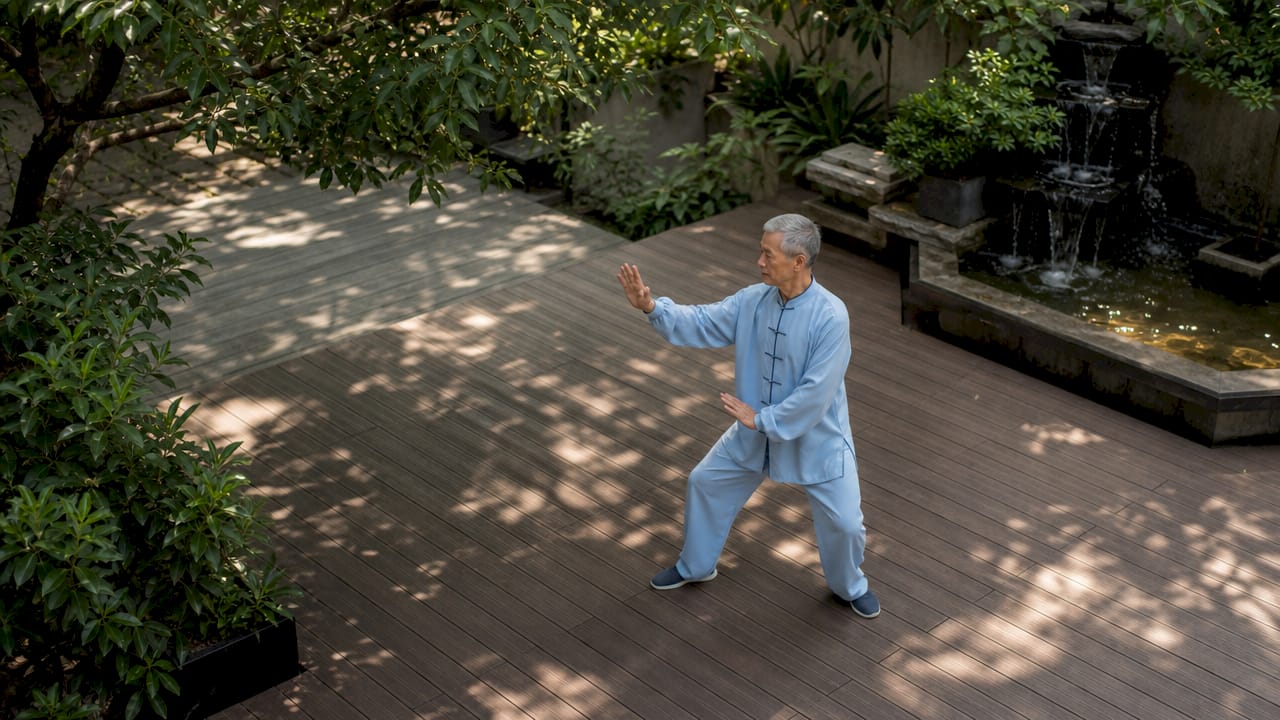
Yoga and tai chi combine breath control with slow, deliberate movement. That combination produces dual benefits: physical tension release and mental focus. A 20-minute beginner yoga session on a living room floor delivers measurable stress relief. Tai chi, sometimes called “moving meditation,” is particularly effective for people who find seated stillness difficult. Both practices are widely available through free video platforms, so cost is not a barrier.
What role does physical activity play in natural stress reduction?
Aerobic exercise stimulates endorphin release and lowers circulating stress hormones like cortisol. A brisk 20-minute walk produces a measurable mood shift. You do not need to run a 5K. The threshold for stress relief through movement is lower than most people assume.
Active relaxation, as defined by the Cleveland Clinic, involves purposeful activities that channel anxious energy rather than suppress it. Gardening, cooking a new recipe, and moderate exercise all qualify. These activities occupy the hands and the mind simultaneously, which interrupts the rumination loop that keeps stress alive. Passive rest, like lying on the couch scrolling, does not produce the same effect.
Here are proven stress-reducing activities at home that count as active relaxation:
- Gardening: Digging, planting, and watering redirect physical tension into productive effort.
- Cooking: Following a recipe requires enough focus to quiet anxious thoughts without being mentally exhausting.
- Dancing: Even 10 minutes of free movement to music raises endorphins and lowers cortisol.
- Stretching: A 15-minute full-body stretch before bed reduces muscle tension accumulated during the day.
- Walking: A mindful walk around the block, paying attention to sounds and sights, combines movement with mindfulness for dual stress relief.
The key insight from Cleveland Clinic research is that many people underestimate active engagement as a stress tool. They assume relaxation means doing nothing. For people with anxious energy, doing nothing often makes stress worse. Purposeful activity is frequently the better prescription.
How can your home environment support stress relief?
Your physical environment sends constant signals to your nervous system. A cluttered desk, harsh overhead lighting, and a phone buzzing with notifications all keep your brain in alert mode. Adjusting these factors is one of the fastest ways to calm your mind naturally without any technique or practice.
Visual decluttering and dimming lights 30 minutes before you intend to relax cue the brain to shift toward rest. This is not aesthetic preference. It is a behavioral signal that changes neurological state. A tidy, softly lit room tells your nervous system the threat has passed.
Follow these steps to adjust your home environment for stress relief:
- Reduce caffeine after noon. Cutting daily caffeine intake lowers baseline anxiety within 1–2 weeks. Caffeine keeps the nervous system in a stimulated state long after the cup is finished.
- Set a screen cutoff time. Screens emit blue light and deliver a constant stream of stimulating content. Stopping screen use 60 minutes before bed improves sleep quality and reduces nighttime anxiety.
- Dim your lights at 8:00 PM. Bright overhead lighting suppresses melatonin and keeps the brain alert. Switch to lamps or warm-toned bulbs in the evening.
- Open a window or step outside. Fresh air and brief nature exposure, even a 10-minute walk in a park, lower cortisol levels. Forest bathing, the Japanese practice of slow, sensory-focused time in nature, has a documented calming effect on the nervous system.
- Designate one room or corner as a no-phone zone. Physical separation from your device removes the temptation to check it and gives your brain a genuine rest zone.
Pro Tip: Place a small basket near your front door and drop your phone in it when you get home. The physical act of putting it away creates a psychological boundary between “on” and “off” time.
What are effective ways to use downtime and self-care for stress management?
Purposeful downtime is not the same as passive leisure. Doomscrolling, binge-watching without intention, and lying in bed awake all feel like rest but do not restore the nervous system. Purposeful downtime involves activities that engage you without draining you.
Journaling is one of the most underused home remedies for stress. Writing three sentences about what went well today, a practice aligned with CDC-validated gratitude habits, shifts attention away from threat and toward resource. You do not need a structured journal. A note app works. The act of writing, not the format, produces the benefit.
Effective self-care activities for stress reduction at home include:
- Reading fiction: Immersive reading reduces muscle tension and lowers heart rate within minutes of starting.
- Crafts and creative projects: Knitting, drawing, and building models produce a flow state that quiets the default mode network, the part of the brain responsible for worry.
- Social connection: A 15-minute phone call with a close friend lowers cortisol more reliably than most solo relaxation techniques.
- Sleep hygiene: Consistent sleep and wake times regulate cortisol rhythms. Poor sleep amplifies every other stress response. Reviewing sleep improvement strategies can help you build a more consistent nighttime routine.
- Scheduling “me-time” as a non-negotiable appointment: Treating personal rest like a meeting prevents it from being crowded out by other demands.
Mayo Clinic advises that no single method works for everyone. Experimenting with aromatherapy, rhythmic movement, and digital disconnection helps you identify your personal triggers for calm. That personalization is what makes a self-care routine stick long-term.
Key Takeaways
Reducing stress naturally at home without medication requires daily practice across breathing, movement, environment, and intentional rest, not a single technique applied once.
| Point | Details |
|---|---|
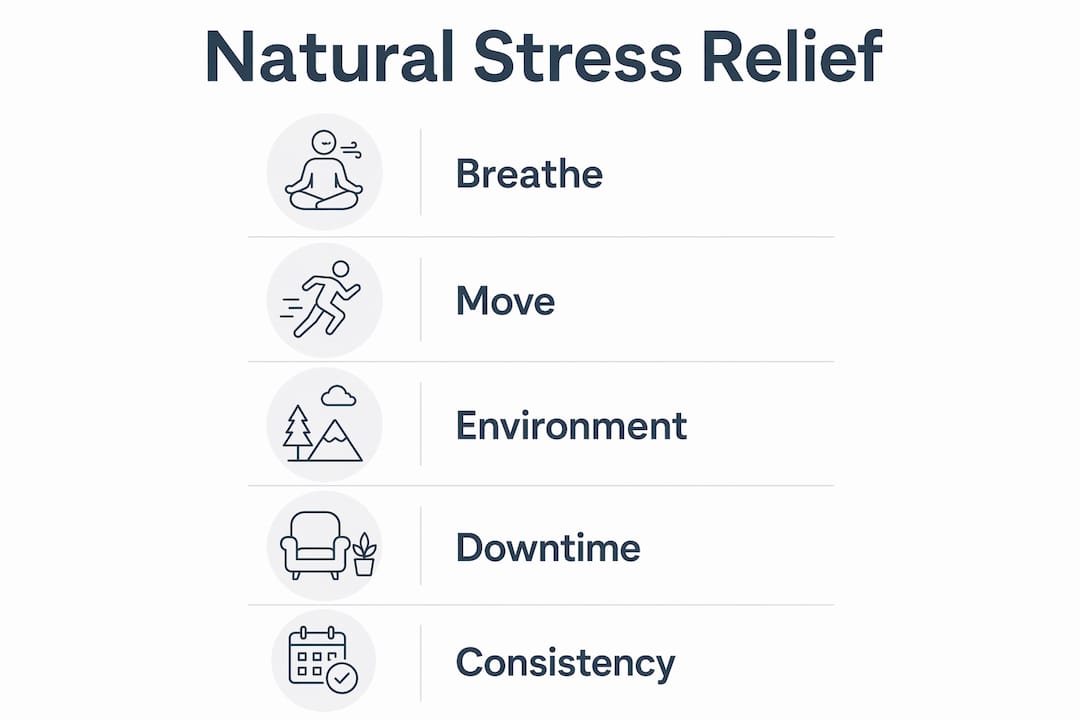
| Breathing is the fastest tool | Box breathing and diaphragmatic breathing activate the relaxation response in under 60 seconds. |
| Active relaxation beats passive rest | Gardening, cooking, and movement channel anxious energy more effectively than doing nothing. |
| Your environment shapes your stress level | Dimming lights, reducing clutter, and cutting screen time lower baseline anxiety within days. |
| Purposeful downtime restores the nervous system | Journaling, reading, and social connection produce genuine rest; doomscrolling does not. |
| Consistency builds resilience | Daily short practice sessions build the parasympathetic system’s response more sustainably than occasional long ones. |
What consistent practice has taught me about natural stress relief
The most common mistake people make with natural stress relief is treating it like a fire extinguisher. They reach for a breathing exercise only when they are already overwhelmed. By that point, the nervous system is too activated to respond quickly. The real benefit comes from practicing these techniques when you are calm, so your body knows the pathway when stress hits hard.
Relaxation is a learned skill requiring daily effort, not an innate ability or an instant fix. Harvard Medical School researchers are explicit about this. The relaxation response needs to be trained, the same way a muscle needs to be trained. You do not get strong by lifting weights once.
What I have seen work consistently is pairing a technique with an existing habit. Breathing exercises attached to your morning coffee. A 10-minute walk after lunch. Dimming the lights at the same time every evening. These pairings remove the need for willpower because the cue already exists in your day.
Racing thoughts during relaxation practice are normal, not a sign of failure. The Cleveland Clinic is clear on this: the goal is gentle redirection back to the breath, not the elimination of all thought. Expecting a blank mind is the fastest way to quit. Expecting a wandering mind and redirecting it, that is the actual practice.
The people who manage stress most effectively long-term are not the ones who found the perfect technique. They are the ones who built a short, repeatable routine and protected it. Start with one method. Practice it daily for two weeks. Then add a second. That is the approach that actually works.
— Wellthious
Support your stress relief routine with Wellthious
Building a natural stress relief routine takes time, and physical tension is often the last thing to release. Muscle tightness in the neck, shoulders, and back keeps the nervous system in a guarded state even after your mind has calmed down.
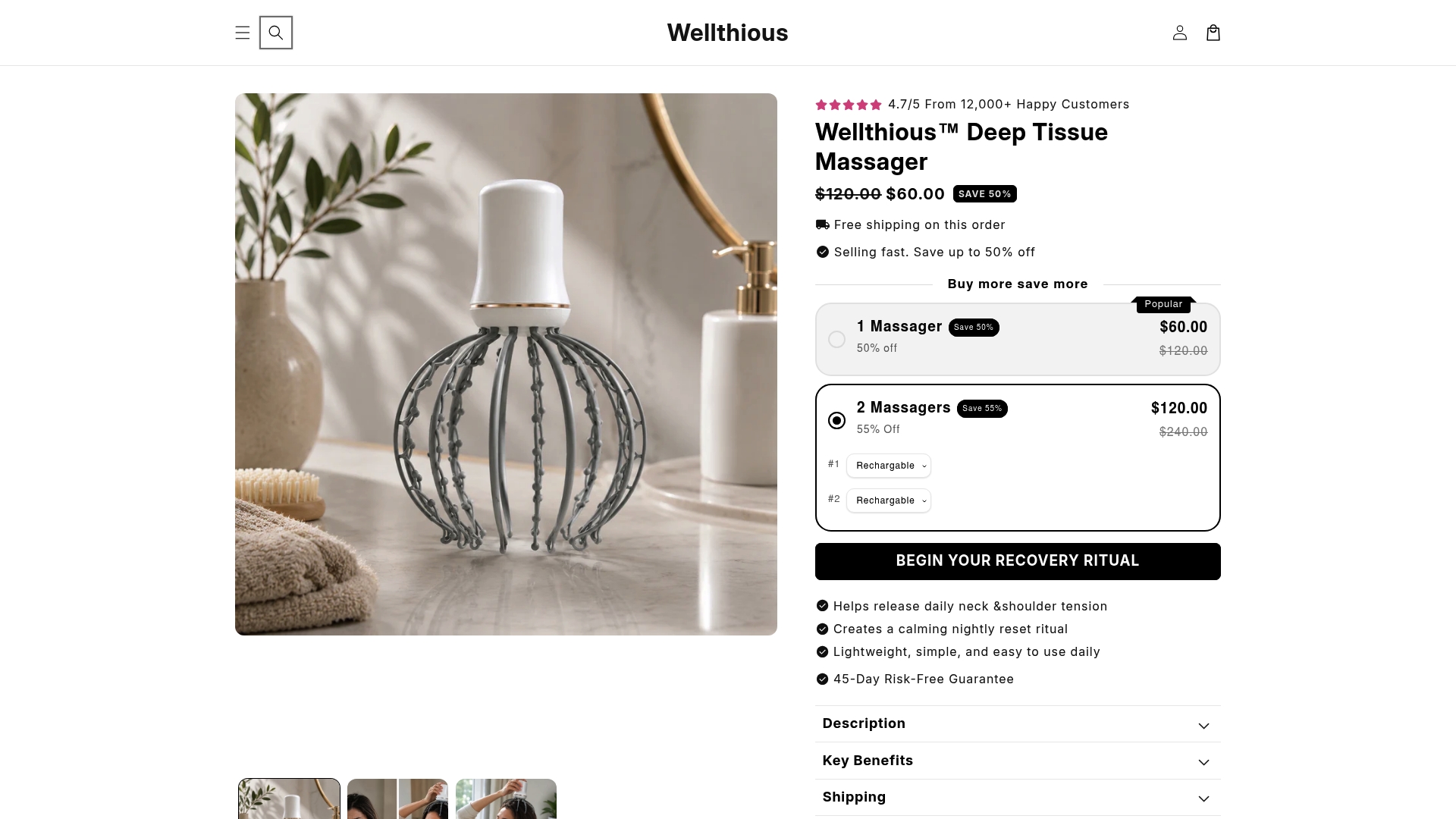
The Wellthious™ Deep Tissue Massager is designed to address exactly that. It targets deep muscle tension to support the physical side of relaxation, making it a practical complement to breathing exercises, movement, and your evening wind-down routine. When your body releases tension, your mind follows. You can explore the full range of Wellthious wellness products built to support your daily self-care practice.
FAQ
What is the fastest way to calm your mind naturally?
Box breathing, which involves inhaling for 4 counts, holding for 4, exhaling for 4, and holding for 4, activates the parasympathetic nervous system in under 60 seconds. Even a single cycle produces a measurable reduction in heart rate.
Can exercise really reduce anxiety without drugs?
Yes. Aerobic exercise stimulates endorphin release and lowers cortisol, the primary stress hormone. A brisk 20-minute walk is enough to produce a noticeable mood shift for most people.
How long does it take for lifestyle changes to reduce stress?
Cutting caffeine and screen time can lower baseline anxiety within 1–2 weeks. Breathing and mindfulness techniques build effectiveness over several weeks of daily practice, as the relaxation response strengthens with repetition.
Is passive rest enough for stress relief at home?
Passive rest like watching TV or scrolling does not reliably restore the nervous system. The Cleveland Clinic identifies active relaxation, such as gardening, cooking, or crafts, as more effective for people with anxious energy.
Do I need to meditate for a long time to get results?
No. Brief micro-doses of relaxation practice, even 60-second breathing cycles repeated throughout the day, build the parasympathetic system’s responsiveness more sustainably than occasional long sessions.