
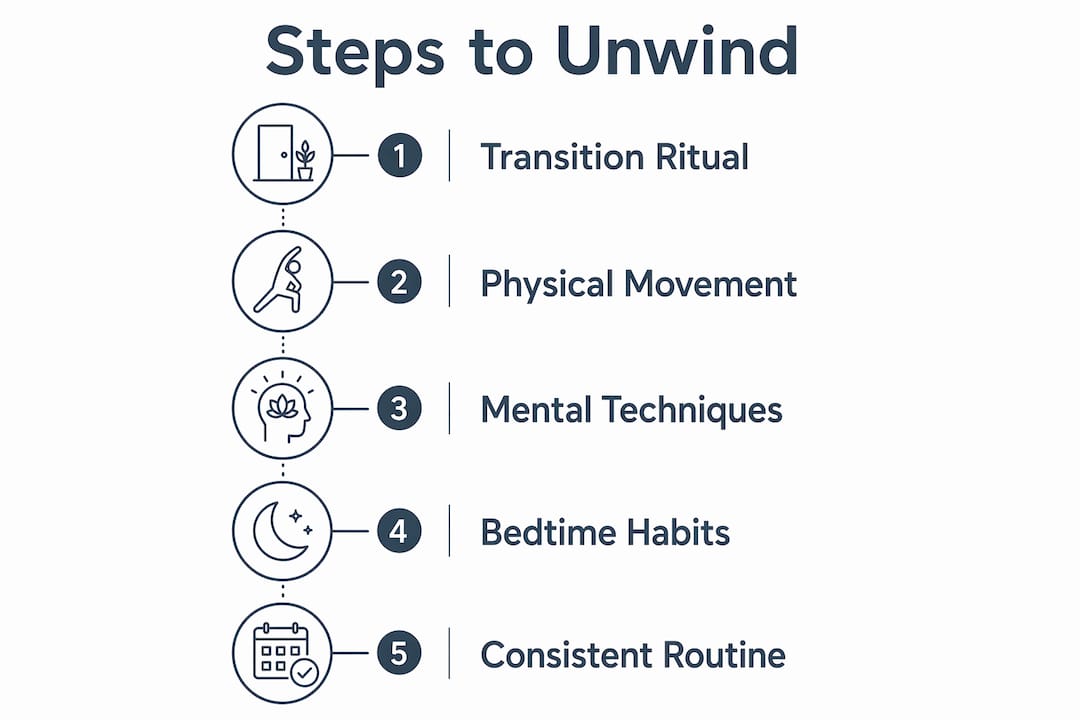
After a demanding day, it can be surprisingly difficult to switch off. Even after you’ve closed your laptop or left the office, your mind may still be racing through emails, conversations, and tomorrow’s to-do list. Learning how to unwind after a stressful day isn’t about doing nothing—it’s about giving your mind and body the signals they need to transition from work mode into recovery. The most effective approach combines simple transition rituals, gentle movement, mental decluttering, and healthy evening habits that help you truly relax.
Stress isn’t only mental. Many people also carry it physically, particularly through the scalp, jaw, neck, and shoulders, making intentional relaxation even more important at the end of the day.
What are transition rituals and why do they matter?
Transition rituals are the single most underused tool for evening relaxation. A transition ritual is any deliberate sensory or behavioral cue that signals your brain the workday has ended. Without one, your nervous system stays in work mode long after you close your laptop.
The mechanism is straightforward. Your brain responds to environmental and physical cues. When you change clothes, dim the lights, or step outside for a short walk, you send a clear neurological signal that the context has shifted. These sensory cues lower cortisol and reduce what researchers call “work-life stress leakage,” the tendency for job tension to bleed into personal time.
Effective transition rituals include:
-
Changing clothes immediately after work to create a physical break from your work identity
-
Adjusting lighting by dimming overhead lights or switching to warm lamps to shift your environment
-
A short walk around the block to physically separate your work space from your personal space
-
A brief shutdown routine such as writing tomorrow’s top three tasks before closing your computer
Pro Tip: Pick one ritual and do it at the same time every day. Consistency is what makes the cue work. A ritual you do occasionally is just a habit. A ritual you do daily becomes a neurological switch.
Over time, these small rituals become cues your brain associates with safety, rest, and recovery, making it easier to unwind even after particularly demanding days.
How can physical movement help you relax after work?
Light physical activity is one of the most direct ways to relax after work because it works on a chemical level.
Research also suggests that moderate physical activity supports emotional wellbeing by improving mood and helping regulate the body’s physiological response to stress, making it one of the most accessible ways to unwind after a busy day.

Dartmouth Health recommends a 20-minute daily walk, ideally before noon, for maximum stress reduction and mental restoration. That timing works well for morning stress prevention, but an evening walk after work delivers similar decompression benefits for most people.
Gentle movement options that work well after a demanding day include:
-
Walking at a comfortable pace for 15–20 minutes outdoors
-
Stretching or yoga focused on the neck, shoulders, and lower back where tension accumulates
-
Light bodyweight exercises such as slow squats or gentle lunges that engage muscles without spiking heart rate
-
Dancing to a few songs, which combines movement with mood-lifting music
Some people also find that a few minutes of gentle self-massage around the scalp, neck, or shoulders helps release accumulated muscle tension and creates a stronger transition into the evening. When combined with walking or stretching, it can become part of a simple, consistent relaxation routine.
Pro Tip: If you work from home and never physically leave your workspace, a post-work walk is especially important. It replaces the commute that used to serve as your natural transition buffer.
Physical movement also builds a sense of agency over your stress response. Stress reduction techniques that involve the body teach your brain it has control over how stress feels. That sense of control is itself calming.
What mental techniques release stress and promote relaxation?
Mental decompression is the part most people skip, and it is the part that matters most for stopping rumination. Rumination, the loop of replaying work problems after hours, is the primary driver of evening anxiety and poor sleep. These four techniques break that loop directly.
-
Controlled deep breathing. Slow, diaphragmatic breathing activates the parasympathetic nervous system, your body’s built-in off switch. Inhale for four counts, hold for four, exhale for six. Three to five minutes of this practice measurably lowers heart rate. Focused breathing gives the brain agency over the stress response, which is why it works faster than distraction.
-
Short meditation sessions. You do not need 30 minutes of silent sitting. A 5-minute body scan or guided audio session is enough to shift your nervous system state. Apps like Calm or Insight Timer offer sessions under 10 minutes that fit into any evening.
-
Journaling with the “name it to tame it” method. Writing down what stressed you labels the emotion, which reduces its intensity. Neuroscience research shows that naming an emotion activates the prefrontal cortex and dials down the amygdala’s alarm response. Three sentences about what happened and how you felt is enough.
-
The “tomorrow folder” method. Write every unfinished work thought onto a list labeled “tomorrow.” This mental unloading strategy trains your brain to stop ruminating by giving it a concrete place to park those thoughts. Once they are written down, your brain releases the need to keep cycling through them.
Reducing screen time before bed amplifies all of these techniques. Blue light from phones and laptops suppresses melatonin production and keeps your brain in a stimulated state. Cutting screens 60 minutes before sleep is one of the highest-return habits you can build.
Pro Tip: Combine journaling and the tomorrow folder into one five-minute session. Write what stressed you, then write what you will do about it tomorrow. That sequence closes the mental loop and signals completion.
How does sleep support recovery, and what bedtime habits help?
Sleep is the primary mechanism through which your brain and body recover from stress. The CDC recommends 7–9 hours of sleep per night for adults. Falling short of that range raises cortisol, weakens emotional regulation, and accelerates burnout. Sleep is not passive recovery. It is when your brain consolidates memory, clears metabolic waste, and resets stress hormones.
Health experts advise avoiding electronic devices for 60–120 minutes before bedtime to protect sleep quality. That window allows melatonin to rise naturally and body temperature to drop, both of which are required for deep sleep.
A consistent bedtime routine trains your nervous system to expect sleep at a specific time. These habits work best when practiced nightly:
-
Warm shower or bath 60–90 minutes before bed, which raises then drops body temperature and triggers sleepiness
-
Calming reading with physical books or e-ink readers that do not emit blue light
-
Consistent sleep and wake times, even on weekends, to anchor your circadian rhythm
-
A cool, dark bedroom set between 65°F and 68°F, the range most conducive to deep sleep
| Bedtime habit | Why it works |
|---|---|
| Warm shower 60–90 min before bed | Triggers a body temperature drop that signals sleep readiness |
| No screens 60–120 min before bed | Allows melatonin to rise without blue light interference |
| Consistent sleep schedule | Anchors circadian rhythm and reduces time to fall asleep |
| Cool, dark bedroom | Supports deep sleep stages and reduces nighttime waking |
| Calming reading | Slows mental activity without stimulating the stress response |
For more on building a structured evening routine, Wellthious covers evening self-care habits that support both sleep quality and daily stress recovery.
Key Takeaways
The most effective way to unwind after a stressful day is a short, consistent routine that combines a physical transition cue, light movement, mental decluttering, and a sleep-ready bedtime habit.
| Point | Details |
|---|---|
| Use transition rituals daily | A consistent sensory cue like changing clothes signals your brain that work is over. |
| Move for 15–20 minutes | Light movement lowers cortisol and releases endorphins without disrupting sleep. |
| Unload your mind in writing | Journaling and the tomorrow folder method stop rumination before it starts. |
| Protect your pre-sleep window | Avoid screens 60–120 minutes before bed to allow natural melatonin production. |
| Prioritize 7–9 hours of sleep | CDC-recommended sleep duration is the foundation of daily stress recovery. |
What I have learned about routines that actually stick
Most people approach evening decompression the wrong way. They build a 12-step routine they read about online, follow it twice, and abandon it by Thursday. The problem is not motivation. The problem is complexity.
Short, repeatable routines of 10–30 minutes that combine physical and mental steps consistently outperform long, elaborate plans.
In practice, many people discover that a simple routine they can maintain consistently is far more effective than an elaborate plan they rarely complete. A 15-minute routine you do every day beats a 90-minute routine you do when you feel like it.
The other common mistake is treating relaxation as purely passive. Watching TV or scrolling social media feels restful but does not lower cortisol or stop rumination. Genuine decompression requires at least one active step, whether that is a walk, a breathing exercise, or five minutes of journaling. Passive consumption delays recovery. Active techniques accelerate it.
One more thing worth saying: stress is not always the enemy. Stress signals issues that need attention. If the same stressor keeps showing up every evening, relaxation techniques manage the symptoms but do not fix the source. The most effective approach pairs evening decompression with a clear plan to address whatever is driving the stress. That combination produces lasting relief, not just temporary calm.
Start with two habits: a five-minute transition ritual and a consistent bedtime. Build from there. Wellthious recommends keeping your routine short enough that skipping it feels worse than doing it.
— Wellthious
Wellthious products that support your relaxation routine
Physical tension is one of the hardest parts of stress to release on your own. Tight shoulders, a stiff neck, and lower back pressure do not always respond to breathing exercises alone.
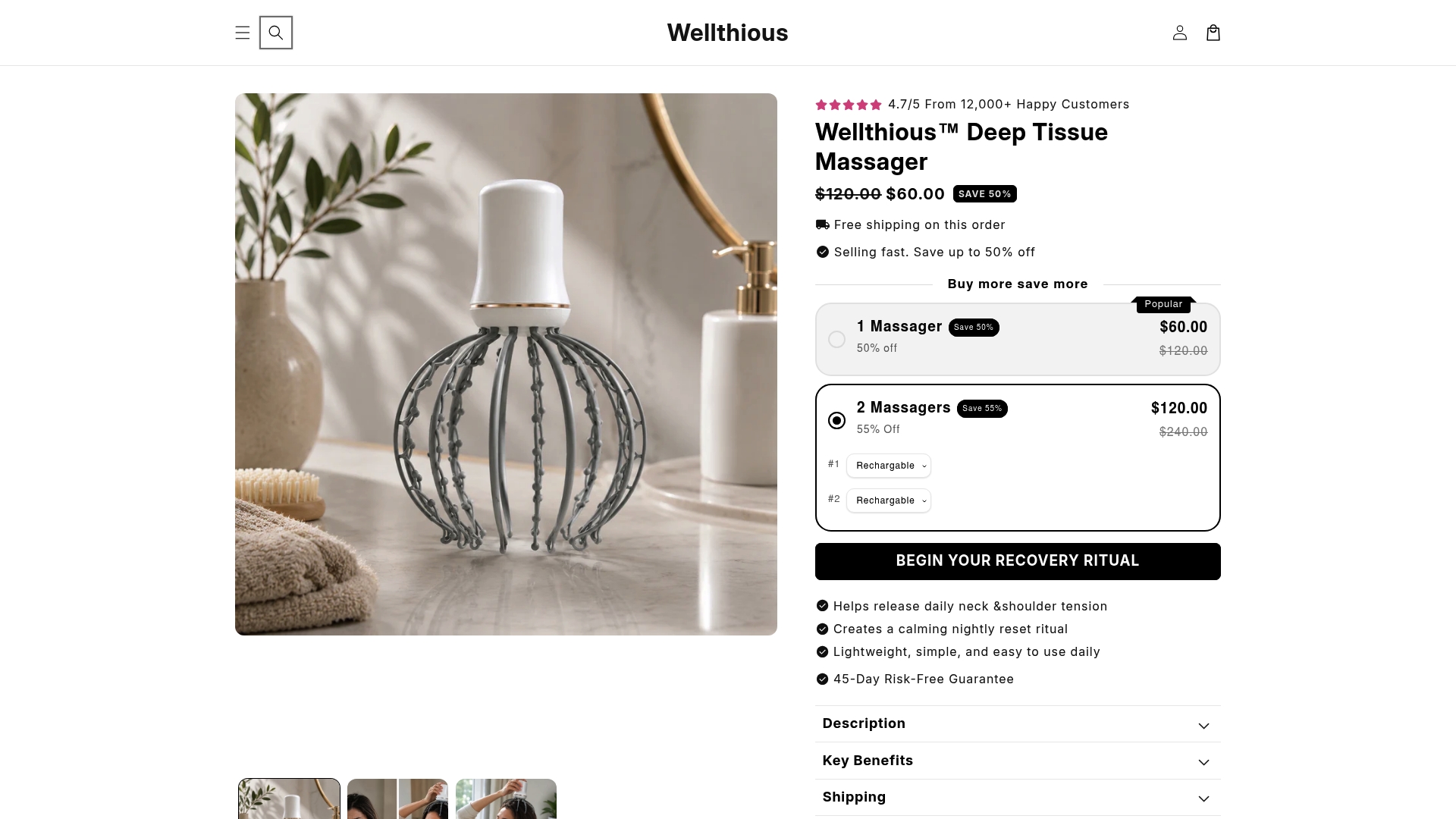
If physical tension tends to linger after stressful days, adding a few minutes of targeted massage can complement breathing exercises, stretching, and other relaxation techniques. Rather than replacing healthy habits, massage devices can become one more step in an evening routine designed to help you transition into rest.
Wellthious designs premium wellness tools that fit naturally into daily routines. Whether you’re easing tension after work or creating a consistent bedtime ritual, products like the Reset Ritual Scalp Massager and Deep Tissue Massager are designed to support relaxation without adding unnecessary complexity.
FAQ
Further Reading
If you’re building a more intentional evening wellness routine, you may also find these guides helpful:
-
Relieve Head Tension Naturally Without Medication
-
Evening Self-Care Routine for Busy Professionals
-
Best Scalp Massager for Relaxation
-
Natural Ways to Reduce Stress Before Bed
-
Screen Fatigue Recovery Guide
What is the fastest way to de-stress after work?
A five-minute transition ritual combined with controlled deep breathing is the fastest way to shift your nervous system out of work mode. Changing clothes and doing four to six slow breaths lowers cortisol within minutes.
Is meditation effective for stress relief?
Yes. Even short sessions of 5–10 minutes of focused breathing or body scan meditation measurably reduce the physiological stress response by activating the parasympathetic nervous system.
How many hours of sleep do I need to recover from stress?
The CDC recommends 7–9 hours of sleep per night for adults. Sleeping less than seven hours raises cortisol and weakens emotional regulation, making stress harder to manage the next day.
Can a scalp massager help you relax before bed?
Many people find that a gentle scalp massage helps ease physical tension accumulated throughout the day. While it isn’t a treatment for stress, it can be a relaxing addition to an evening routine alongside stretching, breathing exercises, and good sleep habits.
### Why is it so difficult to switch off after work?
Why is it so difficult to switch off after work?
Stress hormones and mental rumination often keep the brain in “work mode” even after the workday ends. Creating a consistent transition ritual, reducing screen time, and practicing relaxation techniques can help signal to your body that it’s time to unwind.
What is the “tomorrow folder” method?
The tomorrow folder is a written list where you park every unfinished work thought before bed. Writing tasks down gives your brain permission to stop cycling through them, which reduces evening rumination and improves sleep quality.
Can natural methods reduce stress without medication?
Yes. Physical movement, controlled breathing, journaling, and consistent sleep schedules are all clinically supported methods for reducing stress. Wellthious covers natural stress reduction approaches in detail for those who want a medication-free path.
The goal isn’t to build the perfect evening routine overnight. It’s to create a few small habits that consistently tell your body and mind it’s safe to slow down. Over time, those moments become the foundation of better recovery, better sleep, and greater resilience.
The Wellthious Principle:
Sustainable wellbeing isn’t built through dramatic changes. Small, repeatable rituals—whether it’s a five-minute walk, a breathing exercise, or a relaxing scalp massage—can become meaningful habits that support long-term physical and mental wellbeing.