
How long should you use a scalp massager per session?
Use your scalp massager for 3–10 minutes per session. That range covers the sweet spot where blood flow increases and tension releases without tipping into irritation. Clinical research used just 4 minutes daily and produced measurable results over 24 weeks. Start there, then adjust based on how your scalp responds.
Quick-reference guide:
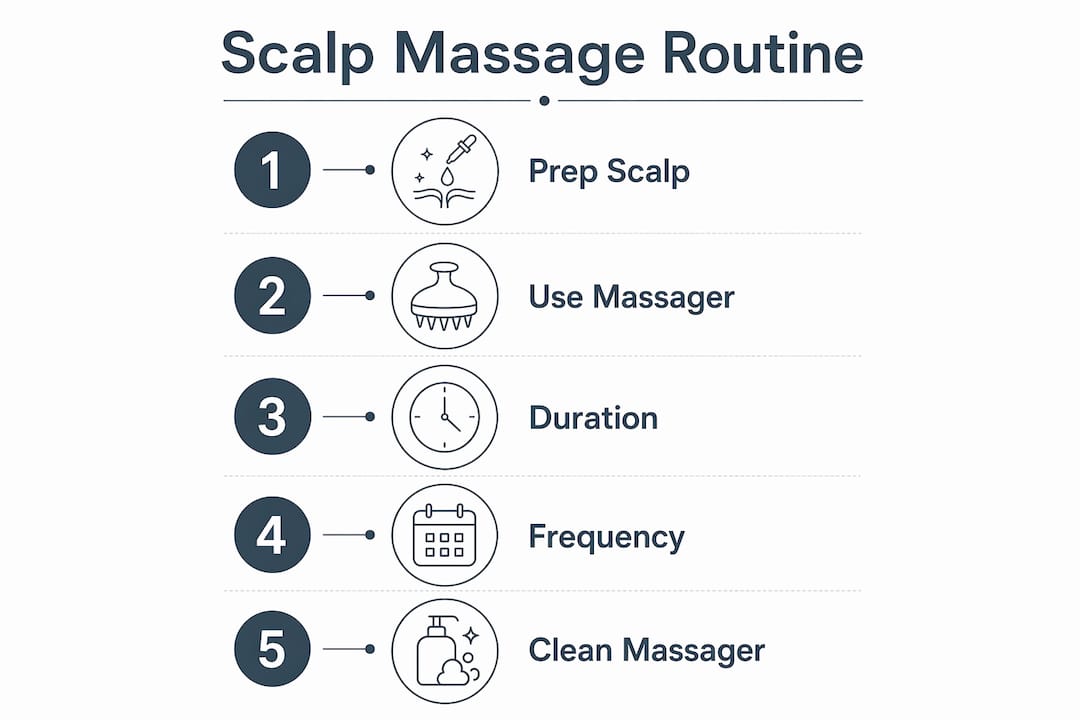
- Session length: 3–10 minutes, with 4 minutes daily being the most research-backed starting point
- Frequency: Daily or every other day, depending on scalp sensitivity
- Pressure: Light to moderate; never press hard enough to cause discomfort
- Consistency: Daily use over at least 6 months produces the strongest hair growth results
- Stop if: You feel pain, notice redness, or experience unusual shedding after sessions
The duration for scalp massage matters less than you might think once you’re in the right range. Consistency beats length every time.
What scalp massage actually does for your hair and scalp
Scalp massage works by increasing circulation to the hair follicles, which brings more oxygen and nutrients directly to the root. That improved blood flow is one reason people notice a difference in hair texture and thickness over time. Beyond circulation, the physical pressure also stretches the dermal papilla cells beneath the scalp, triggering gene expression changes that support the hair growth cycle.
The relaxation benefits are just as real. The American Massage Therapy Association endorses gentle, rhythmic pressure specifically for reducing tension-type headaches, and that same technique carries over to scalp massage. Regular sessions can lower cortisol-related tension in the scalp muscles, which tend to tighten under stress.
Here is what consistent scalp massage supports:
- Hair follicle stimulation through increased circulation and mechanical stretching
- Tension relief in the scalp, neck, and upper head muscles
- Scalp exfoliation by loosening dead skin cells and product buildup
- Gene expression changes that activate hair growth pathways at the cellular level
- Relaxation response that reduces stress-driven scalp tightness
Understanding scalp health’s role in hair growth helps explain why even short daily sessions add up over months.
How to use a scalp massager correctly
Technique matters as much as timing. Using the wrong motion or too much pressure can cause breakage, especially on longer or more fragile hair.
The right way to move the massager:
- Apply light to moderate pressure and use small, circular motions
- Divide hair into sections and work through each one before moving on
- Lift the massager fully between sections rather than dragging it across your hair
- Start at the hairline, move toward the crown, then work down toward the nape
- Spend a few extra seconds on areas where you feel tightness or tension
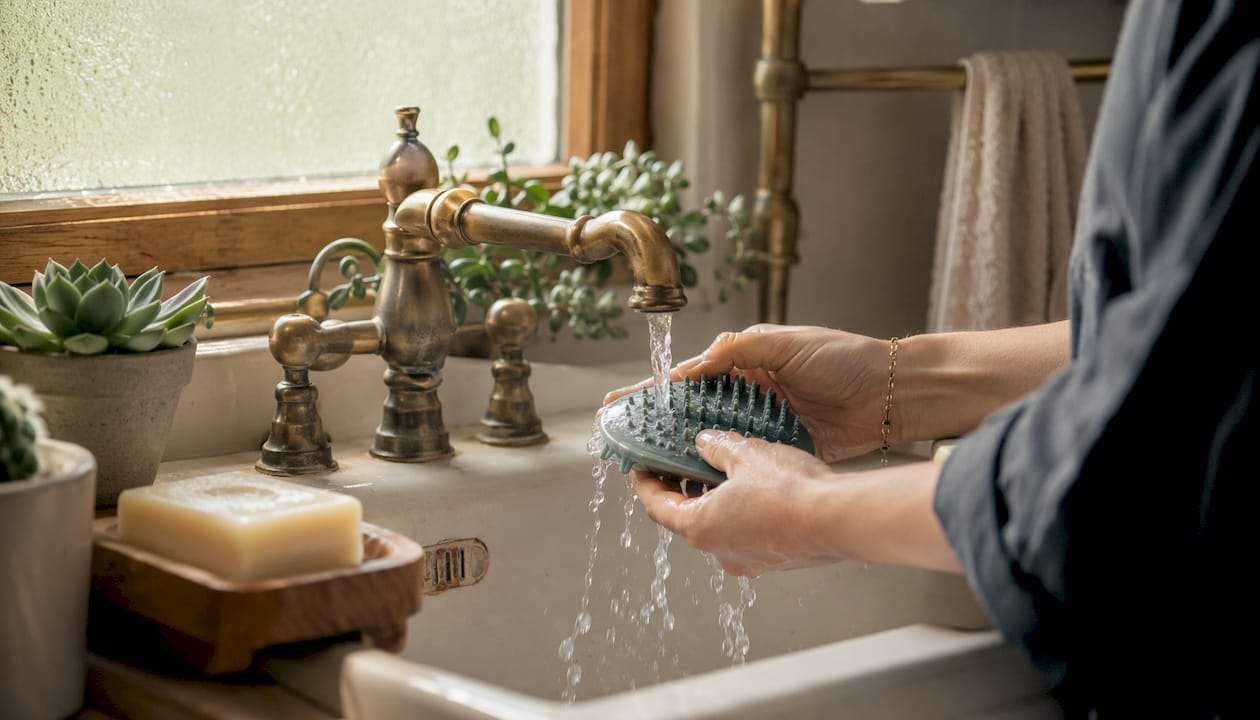
Hygiene matters too. Rinse your massager with warm water and mild soap after each use. Skipping this step allows bacterial buildup that can worsen dandruff and scalp irritation, which defeats the purpose entirely.
Pro Tip: During your first two weeks, keep sessions to 3–4 minutes maximum. Your scalp needs time to adapt to the mechanical stimulation, and overdoing it early can trigger temporary shedding or redness.
How often should you use a scalp massager?
Daily use is the goal for most people, but it is not the only option. Dermatologists advise that daily scalp massage with light to moderate pressure is generally safe, with one important caveat: reduce frequency the moment you notice irritation or redness.
Choosing your frequency:
- Daily: Best for normal to dry scalps focused on hair growth and relaxation
- Every other day: Better for oily scalps or anyone new to scalp massage
- 3–4 times per week: A reasonable starting point if your scalp is sensitive or reactive
Monitoring your scalp’s response is the most reliable guide. After each session, check for redness, tenderness, or unusual tightness. If any of those appear, skip a day and reduce pressure on your next session. Once your scalp adapts, you can gradually return to daily use.
Consistency over months drives the real results. The biological mechanism behind scalp massage is gradual and cumulative, so missing a week here and there matters less than building a reliable habit you can maintain.
Side effects and precautions you should know
Scalp massage is safe for most people, but overuse or poor technique creates real risks. Knowing what to watch for keeps your routine productive rather than counterproductive.
Possible side effects from overuse:
- Scalp irritation or redness from excessive pressure or sessions longer than 20 minutes
- Temporary hair shedding during the first few weeks, especially if you start too aggressively
- Increased oiliness on already oily scalps from overstimulating sebaceous glands
- Soreness or tenderness if you press too hard against the skull
Shorter, consistent sessions of 3–4 minutes prevent mechanical damage and support gene expression benefits better than longer, intense sessions. That finding comes directly from clinical research comparing session approaches.
If you have an active scalp condition such as psoriasis, eczema, or open sores, pause massage entirely and consult a dermatologist before resuming. The same applies if irritation persists beyond a few days after adjusting your technique and pressure.
What the clinical research says about scalp massage duration
The most cited study on this topic is clear. Nine healthy men received 4 minutes of daily scalp massage for 24 weeks. Hair thickness increased from 0.085 mm to 0.092 mm by the end of the study. The researchers also found that the mechanical stretching caused by massage triggered changes in 5,478 genes in the dermal papilla cells, including upregulation of NOGGIN, BMP4, and SMAD4, which are associated with the hair growth cycle.
Key finding: Just 4 minutes of daily scalp massage produced measurable hair thickness increases after 24 weeks, with gene expression changes confirming biological stimulation at the follicle level.
That 4-minute figure is not a ceiling. It is a minimum that produced results. The biological mechanism works slowly, through cumulative stretching of dermal papilla cells over months, which is why a minimum 6-month commitment is needed before you can fairly evaluate your results.
Dermatologists consistently reinforce two points: pressure should stay light to moderate, and frequency should be adjusted to your individual scalp’s tolerance rather than following a rigid prescription.
Signs you should stop mid-session
Your scalp will tell you when to stop. Paying attention to these signals prevents minor discomfort from turning into a real problem.
Stop the session immediately if you notice any of the following:
- Sharp or stinging pain at any point during the massage
- Sudden tenderness that was not present at the start of the session
- Visible redness or warmth spreading across the scalp
- Hair pulling or snagging that does not resolve when you adjust your angle
- Dizziness or headache that develops during the session
Mild tingling or a warm sensation is normal and usually signals increased circulation. The distinction is whether the feeling is pleasant or uncomfortable. If you are unsure, stop and reassess. A session cut short is always better than one that causes irritation you will spend days recovering from.
How to fit scalp massage into your daily routine
The best time for a scalp massager is whenever you can do it consistently. That said, a few timing choices make the habit easier to maintain and the results more noticeable.
Before or during a shower is the most practical option for most people. Applying the massager to dry or slightly damp hair before shampooing loosens buildup and primes circulation. Some people prefer using it during the shampoo step, working the massager through lathered hair for a dual-purpose session.
Before bed works well for relaxation-focused use. A 4 minute session while sitting quietly can lower tension after a long day, and the relaxation benefits of scalp massage carry over into better sleep quality for many people.
Pair the habit with something you already do every day, like brushing your teeth or a skincare routine, so it does not require extra willpower to start. Keep your massager on the bathroom counter where you will see it. The fewer friction points between you and the habit, the more likely you are to stick with it for the 6 months that research supports.
How usage duration changes based on your scalp type
Your scalp type should directly shape how long and how often you massage. A one-size approach does not work here.
Oily scalp: Keep sessions to 3–5 minutes and use every other day. Daily massage on an oily scalp can overstimulate oil production and leave hair looking greasy faster. Focus pressure on the crown and hairline rather than the roots.
Dry scalp: You can comfortably work up to 7–10 minutes daily. Dry scalps benefit from the increased circulation and sebum distribution that massage promotes. Pair sessions with a nourishing scalp oil for added benefit.
Sensitive or reactive scalp: Start with 2–3 minutes every other day and build slowly. Sensitive scalps are more prone to redness and irritation from mechanical stimulation, so the ramp-up period matters more here than for any other type. Light pressure is non-negotiable.
Normal scalp: The standard 4 minutes daily is your baseline. You have the most flexibility to experiment with timing and pressure, and you are the most likely to see the hair thickness results that the clinical research documents.
People recovering from hair transplant procedures should follow specific post-transplant care protocols before reintroducing scalp massage, as timing and pressure guidelines differ significantly from standard use.
Wellthious Stress Relief Massager: built for daily use
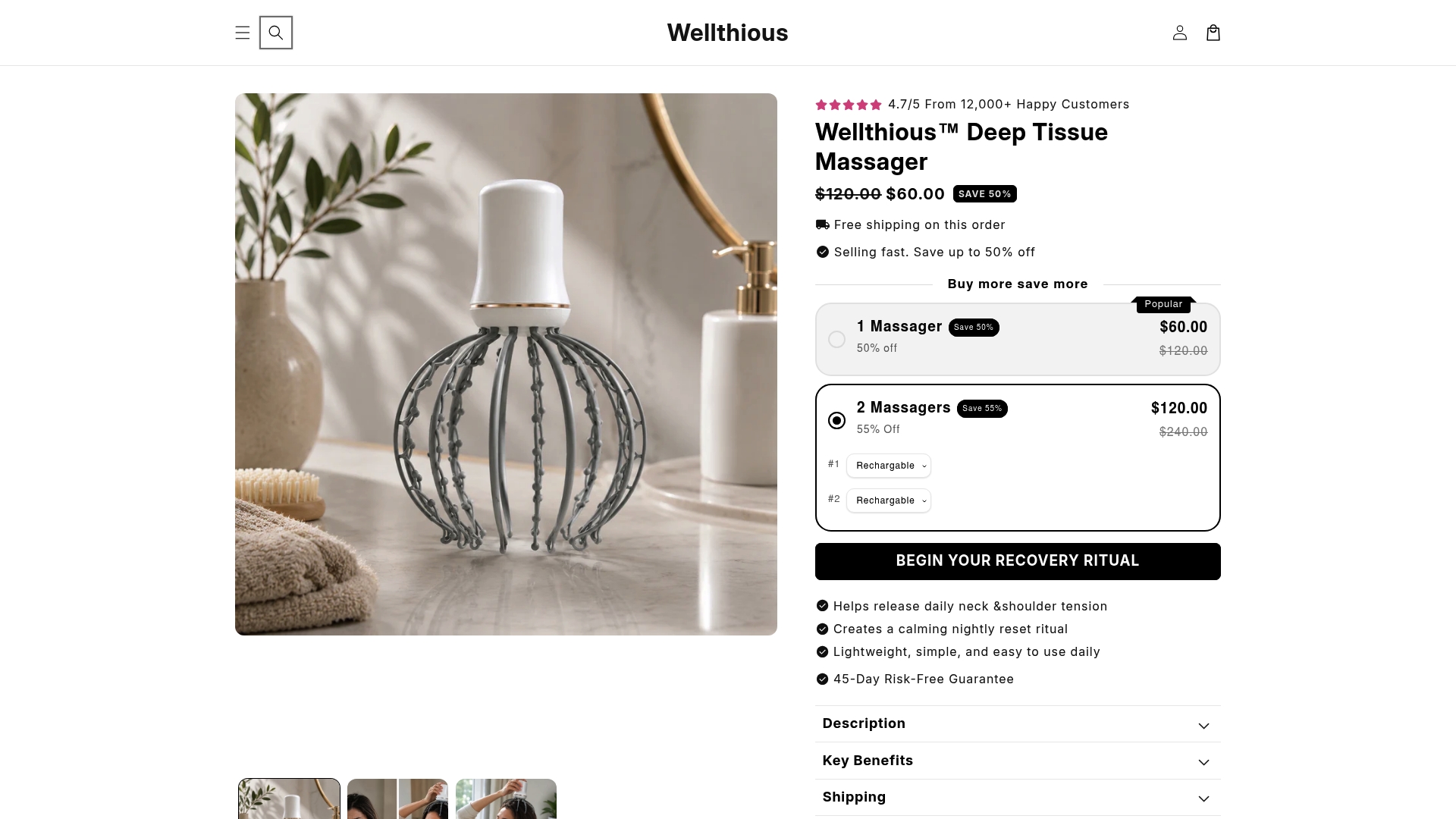
If you are ready to build a daily scalp massage habit, having the right tool makes it easier to stay consistent. The Wellthious™ Stress Relief Massager is designed specifically for this routine, with 120 massage points, adjustable intensity modes, and a cordless design that fits naturally into a shower or bedtime routine. You control the pressure, which means you can start gentle and work up as your scalp adapts.
For deeper tissue work on the neck and scalp together, the Wellthious™ Deep Tissue Massager offers multiple intensity settings and full portability, making it practical for daily use at home or while traveling.
Key Takeaways
Daily scalp massage sessions of short duration, maintained consistently over several months, produce the strongest results for hair thickness and scalp health.
| Point | Details |
|---|---|
| Recommended session length | 3–10 minutes per session; 4 minutes daily is the clinically studied baseline. |
| Optimal frequency | Daily for most scalp types; every other day for oily or sensitive scalps. |
| Clinical evidence | Hair thickness increased from 0.085 mm to 0.092 mm after 24 weeks of 4-minute daily massage. |
| Long-term commitment | A minimum of 6 months of consistent use is needed to see meaningful hair growth benefits. |
| Stop signals | Pause immediately if you feel sharp pain, see spreading redness, or notice hair snagging. |