
A Deep Tissue Massager is a specialized tool designed to relieve stress and reduce head tension by stimulating blood flow and relaxing tight scalp muscles. The Deep Tissue Massager for stress and head tension works by increasing oxygen delivery to scalp tissues, triggering the body’s natural relaxation response, and easing the muscle tightness that builds up from daily stress. Dermatologists and trichologists recommend using a Deep Tissue Massager 1–2 times per week for optimal relaxation with minimal risk of scalp irritation. Wellthious designs its wellness tools around exactly this kind of consistent, gentle self-care. Whether you deal with tension headaches, a tight scalp after long work hours, or stress-related scalp discomfort, the right massager makes a real difference.
Stress often shows up physically before we consciously notice it. A tight scalp, clenched jaw, stiff neck, and tense shoulders are all common signs that the body is still carrying the demands of the day. Learning to recognise those signals early makes it easier to build a simple relaxation routine before discomfort builds further.
How does a Deep Tissue Massager relieve stress and head tension?
Scalp massage relieves stress through two clear physical mechanisms: increased blood circulation and direct muscle relaxation. When the massager’s bristles press against your scalp, blood vessels dilate and deliver more oxygen to the surrounding tissue. That improved circulation reduces the tight, pressured feeling that comes with tension headaches and chronic stress.
The mechanical stimulation also signals your nervous system to lower its alert state. Scalp massage reduces cortisol and promotes relaxation reflexes, which is why even a short session can shift your mood noticeably. Researchers believe these effects are linked to the way touch and gentle pressure influence the nervous system, although individual experiences can vary. It is a measurable physiological response to tactile pressure on a nerve-dense area of the body.
Scalp massage also targets hair follicles directly. Increased blood flow oxygenates hair follicles and relaxes the tiny muscles attached to each one, called arrector pili muscles. When those muscles release, the sensation of scalp tightness fades quickly.
Key physiological benefits of regular scalp massage include:
-
Reduced muscle tension across the scalp and upper neck
-
Lower cortisol levels linked to the relaxation response
-
Improved oxygen delivery to scalp tissue and hair follicles
-
Relief from tension headache symptoms
-
Reduced scalp sensitivity caused by chronic stress
Pro Tip: Apply your scalp massager for 5–10 minutes right after a warm shower. Heat relaxes the scalp muscles first, and the massager deepens that effect.
What types of massagers work best for tension relief?
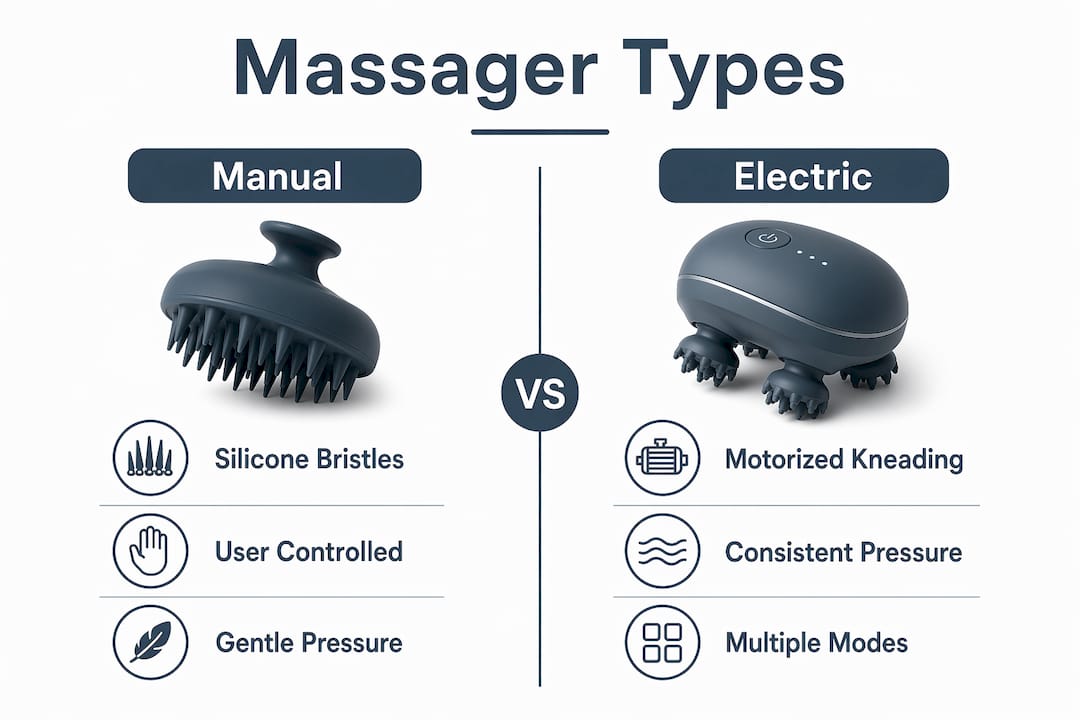
Two main categories exist: manual and electric. Each has a clear use case, and the right choice depends on your scalp type, hair texture, and how much tension you typically carry.
Manual scalp massagers
Manual options are handheld tools with silicone or rubber bristles arranged in a claw or dome shape. You control the pressure directly with your hand. They work well in the shower with shampoo, cost less, and require no charging. The tradeoff is that your hand and wrist do all the work, which limits session length and consistency of pressure.
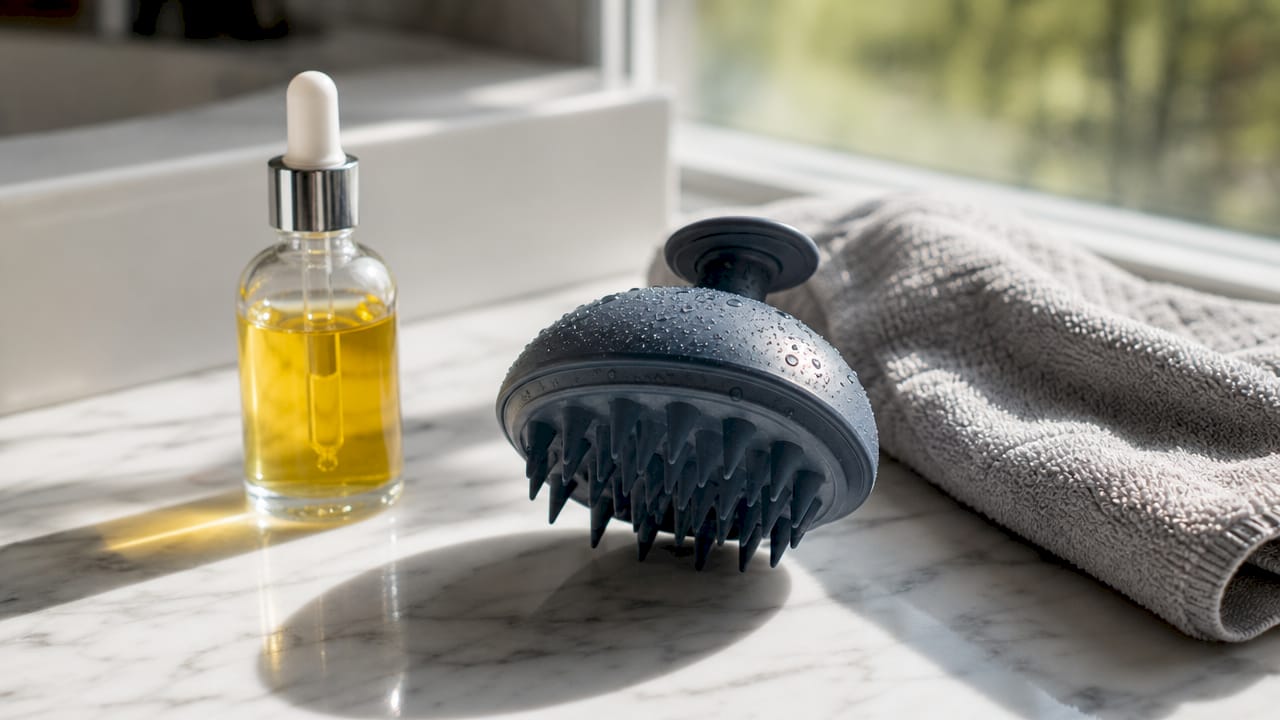
Soft silicone bristles outperform hard plastic for minimizing hair friction and preventing micro-tears on the scalp surface. This matters especially if you have natural, coily, or color-treated hair. Look for bristles with rounded tips and flexible shafts that bend under pressure rather than scraping the scalp.
Electric scalp massagers
Electric models deliver consistent, motorized kneading that no manual tool can replicate. Electric massagers offer multi-mode settings that allow you to switch between gentle relaxation and deeper tension relief in the same session. Advanced models include pulse modes: lower settings around 2,000 pulses per minute work for relaxation, while higher settings around 4,000 pulses per minute target intensive tension relief with 360-degree motion that stays gentle on fragile hair.
Battery life and waterproofing matter more than most people realize. Quality cordless models offer up to 120 minutes of battery life with a 2-hour charge time, and waterproof ratings like IPX-7 make shower use safe and practical.
| Feature | Manual massager | Electric massager |
|---|---|---|
| Pressure control | User-controlled | Motorized, consistent |
| Session length | Limited by hand fatigue | Up to 120 minutes per charge |
| Pulse/mode settings | None | Multiple (relaxation to intensive) |
| Waterproof use | Most are shower-safe | Requires IPX-7 rating or higher |
| Best for | Quick daily use, travel | Deep tension relief, longer sessions |
Features to prioritize when choosing any scalp massager:
-
Soft silicone bristles with rounded, flexible tips
-
Waterproof rating for shower use
-
Ergonomic grip that reduces hand strain
-
Multiple speed or pulse modes
-
Lightweight body under 200 grams for extended sessions
How to use a scalp massager correctly for maximum relief
Proper technique separates effective stress relief from a tool that sits unused in a drawer. Most people make the same mistake: they press too hard and move too fast.
-
Start with light pressure. Treat your scalp the way you would treat facial skin. Excessive force causes hair follicle damage and scalp irritation. Begin with the lightest setting on an electric model, or use only fingertip pressure with a manual tool.
-
Use slow, deliberate movements. Work from the hairline toward the crown in small sections. Spend 30–60 seconds on each area before moving to the next.
-
Lift the massager periodically. Circular motions without lifting cause hair to tangle around the bristles. Lift the tool off the scalp every few passes to release any caught strands. This step protects hair integrity and is the most commonly skipped technique.
-
Vary your motion direction. Alternate between front-to-back and side-to-side strokes. Variation prevents the scalp from becoming desensitized and ensures full muscle coverage.
-
Limit sessions to 5–15 minutes. Longer sessions do not increase benefit and raise the risk of scalp irritation. Consistency over time matters more than session length.
Pro Tip: If you have a scalp condition like psoriasis, open sores, or active dermatitis, skip the massager until your scalp heals. Mechanical stimulation on compromised skin worsens inflammation.
Wet hair use versus dry hair use is a real consideration. Manual massagers work best with shampoo on wet hair because the product reduces friction. Electric models with IPX-7 waterproofing handle wet use well, but check the manual before submerging any device.
What other benefits do scalp massagers offer?
Stress and tension relief are the primary reasons people reach for a scalp massager, but the tool delivers several other measurable benefits that support overall scalp health.
Chronic stress triggers a condition called telogen effluvium, which is stress-related hair shedding caused when hair follicles prematurely enter a resting phase. Regular scalp massage helps break that stress cycle by improving follicle circulation and reducing the hormonal signals that push follicles into dormancy.
Scalp massagers also function as exfoliating tools. The bristles loosen dead skin cells and product buildup that accumulate between washes. Regular massage removes scalp buildup, reduces dandruff, and increases the absorption of serums and treatments applied afterward. If you use a scalp serum or hair oil, applying it before your massage session pushes the product deeper into the scalp tissue.
Additional benefits include:
-
Reduced scalp itchiness and dryness from improved circulation
-
Better absorption of hair growth serums and conditioning treatments
-
Exfoliation of dead skin cells that contribute to dandruff
-
Reduced scalp tightness linked to stress-related inflammation
-
Support for hair follicle health during high-stress periods
| Benefit | Mechanism |
|---|---|
| Stress relief | Cortisol reduction via tactile stimulation |
| Tension headache relief | Muscle relaxation and improved blood flow |
| Hair follicle support | Increased oxygen delivery to follicle tissue |
| Dandruff reduction | Mechanical exfoliation of dead skin cells |
| Product absorption | Bristles push serums deeper into scalp tissue |
Matching the massager type to your scalp condition is the deciding factor in whether you get all of these benefits or just some of them. Sensitive scalps need softer bristles and lower pulse settings. Oily scalps benefit more from firmer exfoliation. Dry or flaky scalps respond best to gentle circular motions with a conditioning oil applied first.
Key Takeaways
The Deep Tissue Massager for stress and head tension combines soft silicone bristles, consistent gentle pressure, and regular use of 1–2 times per week to deliver lasting relief.
| Point | Details |
|---|---|
| Use frequency matters | Stick to 1–2 sessions per week to maximize relief without irritating the scalp. |
| Soft silicone beats hard plastic | Rounded silicone bristles protect hair and scalp from friction and micro-tears. |
| Technique prevents damage | Lift the massager periodically and avoid excessive pressure to protect hair follicles. |
| Electric models offer more control | Multi-mode electric massagers deliver consistent pressure and pulse variety that manual tools cannot match. |
| Benefits extend beyond relaxation | Regular scalp massage reduces dandruff, improves product absorption, and supports follicle health. |
Wellthious’s take on building a scalp massage habit
The biggest mistake people make with scalp massagers is treating them like a one-time fix. You use it once, feel good, and then forget about it for three weeks. That pattern does not build the stress relief you are looking for. Consistency is what creates lasting change in how your scalp feels and how your body handles tension.
Many people discover that the biggest benefit doesn’t come from one massage session—it comes from turning it into a consistent evening habit. The psychological side of that is real. There is something about taking five minutes to physically address tension in your body that interrupts the mental loop of stress. Tactile self-care works because it forces you to slow down and pay attention to how your body feels right now.
The tool you choose needs to match your actual scalp, not the one in a product photo. If you have a sensitive scalp, a high-intensity electric massager on its top setting will cause more irritation than relief. Start with the gentlest option available, build a habit around it, and adjust from there. A tool you use consistently at low intensity will always outperform a tool you use aggressively once a month.
One more thing worth saying directly: do not skip the technique basics. Lifting the massager off the scalp periodically and varying your motion direction are the two steps most people ignore. They are also the two steps that protect your hair from tangling and your scalp from over-stimulation. Get those right, and the rest follows naturally.
— Wellthious
The Wellthious™ Deep Tissue Massager for full-body tension relief
Scalp massage is one part of a complete stress relief routine. The Wellthious™ Deep Tissue Massager extends that relief to your neck, shoulders, and back, which is where most people carry the tension that feeds into scalp tightness in the first place.
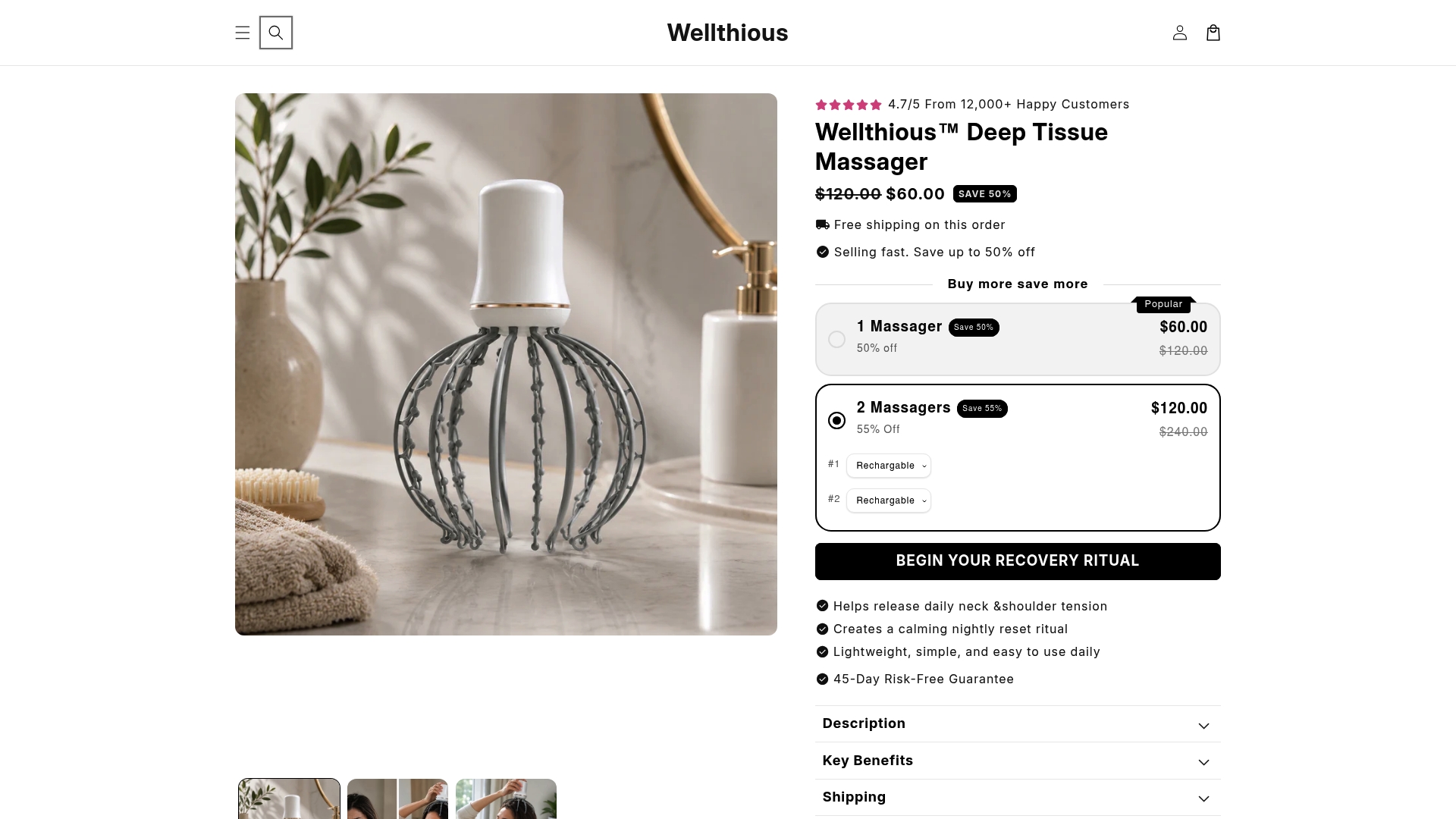
The Wellthious™ Deep Tissue Massager is cordless, ergonomically shaped, and built with multiple intensity settings so you control exactly how much pressure you need. It works on the same principle as scalp massage: consistent mechanical stimulation that increases circulation and signals your muscles to release. Browse the full Wellthious wellness collection to find the tools that fit your routine and your body’s specific stress patterns.
FAQ
How often should I use a scalp massager for stress relief?
Use a scalp massager 1–2 times per week for optimal relaxation and minimal risk of scalp irritation. Daily use is not necessary and can lead to over-stimulation.
Are electric scalp massagers better than manual ones?
Electric massagers deliver consistent pressure and multiple pulse modes that manual tools cannot replicate, making them more effective for deep tension relief. Manual options work well for quick daily use and travel.
Can a scalp massager help with tension headaches?
Scalp massage increases blood circulation and relaxes tight scalp muscles, which are two primary drivers of tension headaches. Regular use at 1–2 times per week can reduce headache frequency and intensity.
What bristle type is safest for all hair types?
Soft silicone bristles with rounded tips are the safest option for all hair types, including natural, coily, and color-treated hair. They minimize friction and prevent micro-tears on the scalp surface.
Who should avoid using a Deep Tissue Massager?
People with open sores, active psoriasis, or dermatitis on the scalp should avoid mechanical massagers until the skin heals. Stimulation on compromised skin worsens inflammation and delays recovery.
Can a deep tissue massager become part of an evening self-care routine ?
Yes. Many people include Deep Tissue Massager alongside stretching, reading, breathing exercises or a warm shower as part of a consistent evening routine. Used regularly, it can become a simple cue that helps separate work from rest.
Recommended
The goal isn’t to find the most powerful massage device—it’s to find one you’ll actually enjoy using consistently. Even five to ten minutes of intentional self-care can become a meaningful signal to your body that the day is over. Over time, those small rituals often have a greater impact than occasional, longer sessions.
Whether you choose a manual or electric Deep Tissue Massager, consistency matters more than intensity. The best tool is one that fits naturally into your routine and helps you create moments of calm that support long-term wellbeing.