
A tight scalp is a physical sensation caused by muscle tension, scalp dryness, or barrier disruption, and it responds well to specific daily relaxation techniques. The three most common triggers are stress-induced muscle contraction, physical strain from tight hairstyles, and chemical damage from harsh shampoos. Relief is achievable through scalp massage, proper hydration, and consistent stress management. Understanding what drives the tightness is the first step toward fixing it.
Why your scalp feels tight: causes and contributing factors
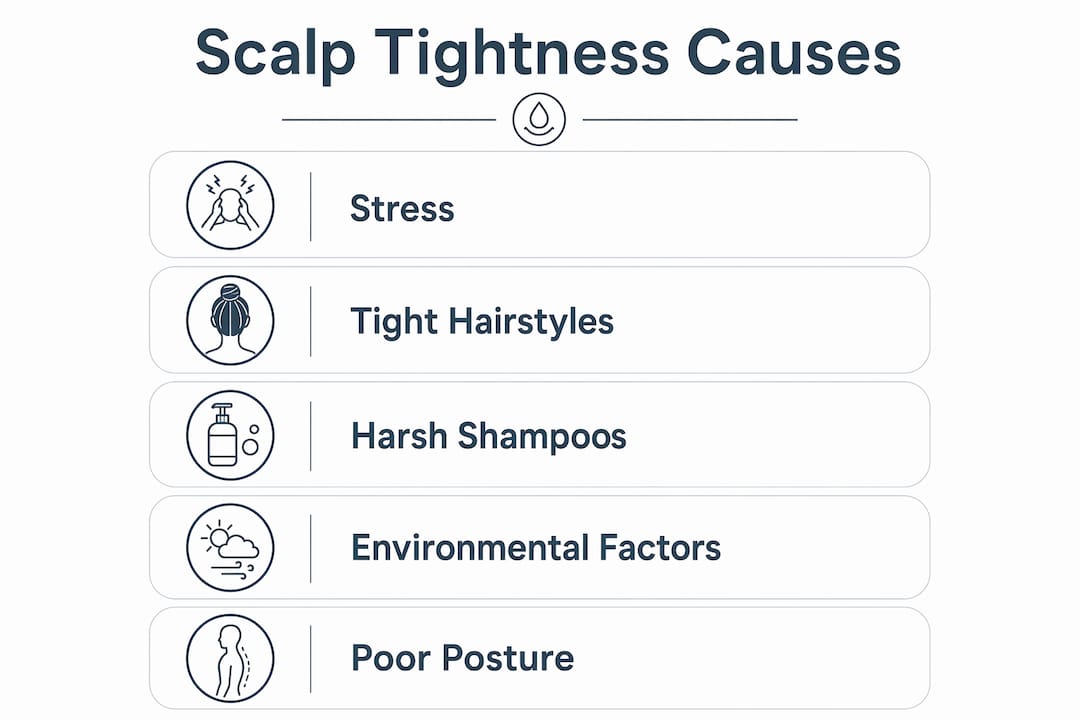
Scalp tightness, clinically described as scalp tension or myofascial tension of the cranial region, is not just a surface-level sensation. It reflects real physical changes happening in the muscles, skin barrier, and nerves beneath your hair. Knowing the specific cause helps you choose the right remedy.
Stress and muscle contraction
Stress causes tiny muscles attached to hair follicles to contract, creating persistent tightness even when your hair is completely down. This is the most overlooked tight scalp cause. Your body holds emotional tension physically, and the scalp is one of the first places it shows up.
Many people also notice tightness around the temples, jaw, and back of the neck at the same time, as these areas often respond together when the body is under prolonged stress.
Tight hairstyles and physical pulling

Ponytails, braids, buns, and extensions place sustained mechanical tension on the scalp. That pulling sensation does not disappear the moment you take your hair down. The muscles and follicles stay stressed for hours afterward, which is why scalp discomfort often lingers into the evening.
Harsh shampoos and over-washing
Sulfates and hard water mineral deposits strip the scalp’s lipid barrier, disrupting its natural pH and increasing dryness and tightness. The “stretched” feeling many people notice right after washing is a direct sign of barrier damage. Over-washing compounds this by removing the natural oils your scalp needs to stay supple.
Environmental factors
Cold air, low humidity, and indoor heating all pull moisture from the scalp. Skin care experts treat a tight scalp as a skin health issue comparable to facial dryness, where compromised barrier function heightens nerve sensitivity and amplifies the tight feeling.
Poor posture
Scalp tension links directly to jaw and neck muscle tightness. Poor posture forces neck and scalp muscles to compensate, radiating tension upward and producing a pulled sensation across the crown. If you spend long hours at a desk, this connection is worth taking seriously.
How does scalp massage relieve tightness?
Scalp massage is the most direct and effective method for releasing scalp muscle tension. It works by increasing blood circulation, relaxing contracted muscles, and activating the parasympathetic nervous system, which is the body’s rest-and-recovery mode.
A 5–10 minute daily scalp massage performed in small circular motions is the recommended standard for relieving tightness and stimulating circulation. Consistency matters more than intensity. A brief daily session outperforms an occasional aggressive one.
Here is how to do it correctly:
-
Start at the temples. Place your fingertips just above your ears and apply gentle circular pressure. The temples hold a significant amount of stress-related tension and respond quickly to massage.
-
Move to the crown. Work your fingertips toward the top of your head using the same small circular motions. Spend extra time here if you wear your hair up regularly.
-
Finish at the nape. The nape of the neck connects directly to the muscles that run up the back of the skull. Releasing tension here often produces immediate relief across the entire scalp.
-
Add a nourishing oil. Daily massage combined with nourishing oils and aromatherapy improves relaxation, circulation, and reduces physical tension supporting a calming self-care routine. Jojoba, argan, lavender and peppermint oil are practical choices that absorb well and support scalp health.
-
Use your fingertip pads, not your nails. Safe scalp massage requires fingertip pads to prevent micro-tears that worsen sensitivity and tightness, especially for people with fragile scalp barriers.
Pro Tip: Warm the oil slightly before applying it. Warmth increases absorption and adds an extra layer of muscle relaxation that room-temperature oil does not provide.
Exploring scalp massage techniques for relaxation can help you build a routine that fits your schedule and comfort level.
Does scalp hydration prevent tightness?
Scalp hydration is not optional. It is a direct defense against the nerve sensitivity and discomfort that come with barrier disruption. A healthy lipid barrier keeps moisture in and irritants out. When that barrier breaks down, the scalp becomes reactive, dry, and tight.
-
Switch to a sulfate-free shampoo. Sulfates are effective cleansers but they strip the scalp’s natural oils aggressively. A mild, fragrance-free formula preserves the lipid barrier while still cleaning effectively.
-
Wash less frequently. Daily washing removes sebum faster than the scalp can replace it. Most people with tightness benefit from washing every two to three days instead of daily.
-
Use a hydrating scalp treatment. Lightweight serums or scalp oils applied between washes help maintain moisture levels without weighing hair down. Look for ingredients like hyaluronic acid, panthenol, or aloe vera.
-
Address hard water. Hard water leaves mineral deposits on the scalp that block moisture absorption and disrupt pH. A shower filter or a chelating shampoo used once a week removes these deposits effectively.
-
Alternate your hairstyles. Wearing your hair in the same style every day concentrates tension on the same follicles. Rotating between styles gives stressed areas time to recover.
Pro Tip: Apply a few drops of jojoba oil to your scalp on the days you do not wash. It closely mimics the scalp’s natural sebum and absorbs without leaving residue.
The stretched feeling after washing is a reliable signal that your current shampoo is too harsh. Treat it as feedback, not just discomfort.
Can stress management ease scalp tension?
Stress is the most underestimated cause of scalp tightness. When you are under pressure, your nervous system activates the fight-or-flight response, which contracts muscles throughout the body, including the tiny muscles attached to every hair follicle on your scalp. The tightness you feel is not imagined. It is a recognized physical response that many people experience during periods of prolonged stress.
Even 5 minutes of focused daily relaxation, such as deep breathing or light movement, can break the tension cycle that manifests as scalp discomfort. Five minutes is a low bar, and that is the point. Small, consistent acts work better than occasional intensive efforts.
Practical relaxation methods that directly reduce scalp tension include:
-
Diaphragmatic breathing. Slow, deep breaths activate the parasympathetic nervous system and signal the body to release muscle tension. Four counts in, hold for four, out for six is a simple starting point.
-
Light physical movement. A 5-minute walk or gentle neck stretches release the compensatory tension in the neck and jaw that radiates up to the scalp.
-
Mindfulness practice. Even brief body-scan meditation, where you consciously notice and release tension from head to toe, directly targets the scalp muscles.
-
Aromatherapy. Lavender and eucalyptus essential oils have well-documented calming effects on the nervous system. Adding a few drops to your scalp massage oil combines two benefits in one practice.
Relieving scalp tension requires a conscious pause to switch off the nervous system. Gentle, consistent release achieves this far more effectively than aggressive interventions. You can find additional techniques for reducing stress at home that pair well with a daily scalp care routine.
Key Takeaways
Scalp tightness is a physical condition driven by muscle tension, barrier disruption, and stress, and it responds best to gentle, consistent daily care rather than intensive or reactive treatments.
| Point | Details |
|---|---|
| Stress is the primary driver | Emotional tension physically contracts scalp muscles, causing tightness even when hair is down. |
| Massage for 5–10 minutes daily | Use fingertip pads in circular motions across temples, crown, and nape to release tension and boost circulation. |
| Protect your scalp barrier | Switch to sulfate-free shampoo and wash every 2–3 days to prevent lipid barrier damage and dryness. |
| Address hard water | Use a shower filter or chelating shampoo weekly to remove mineral deposits that block moisture absorption. |
| Relaxation breaks the cycle | Five minutes of deep breathing or light movement daily interrupts the stress-tension loop affecting your scalp. |
What I have learned about scalp tension after years of wellness work
Most people treat scalp tightness as a hair problem. It is not. It is a stress problem wearing a hair problem’s clothes.
The readers who see the fastest improvement are not the ones who buy the most products. They are the ones who recognize that their scalp is sending a signal about their nervous system, and they respond with consistency rather than complexity. A two-minute oil massage before bed, a sulfate-free shampoo swap, and three deep breaths at your desk. That combination, done daily, outperforms any elaborate weekend routine.
The posture connection surprises most people. Sitting with your chin forward and shoulders rounded for eight hours creates neck and jaw tension that travels directly up to the scalp. Fixing your chair height does more for scalp comfort than most people expect.
The other thing worth saying plainly: do not wait until the tightness is severe before you act. Your scalp gives you early signals, a mild pulling sensation, slight sensitivity when you touch your hair. Those signals are worth listening to. Catching tension early means a five-minute massage fixes it. Ignoring it means it becomes a persistent ache that takes weeks to unwind.
Simplicity is the strategy. Gentle, regular, and consistent care is what your scalp actually needs.
— Wellthious
Wellthious tools that support daily scalp relaxation
Massage technique matters, but the right tool makes it easier to stay consistent. Wellthious designs wellness products specifically for people who want effective daily relaxation without complicated routines.
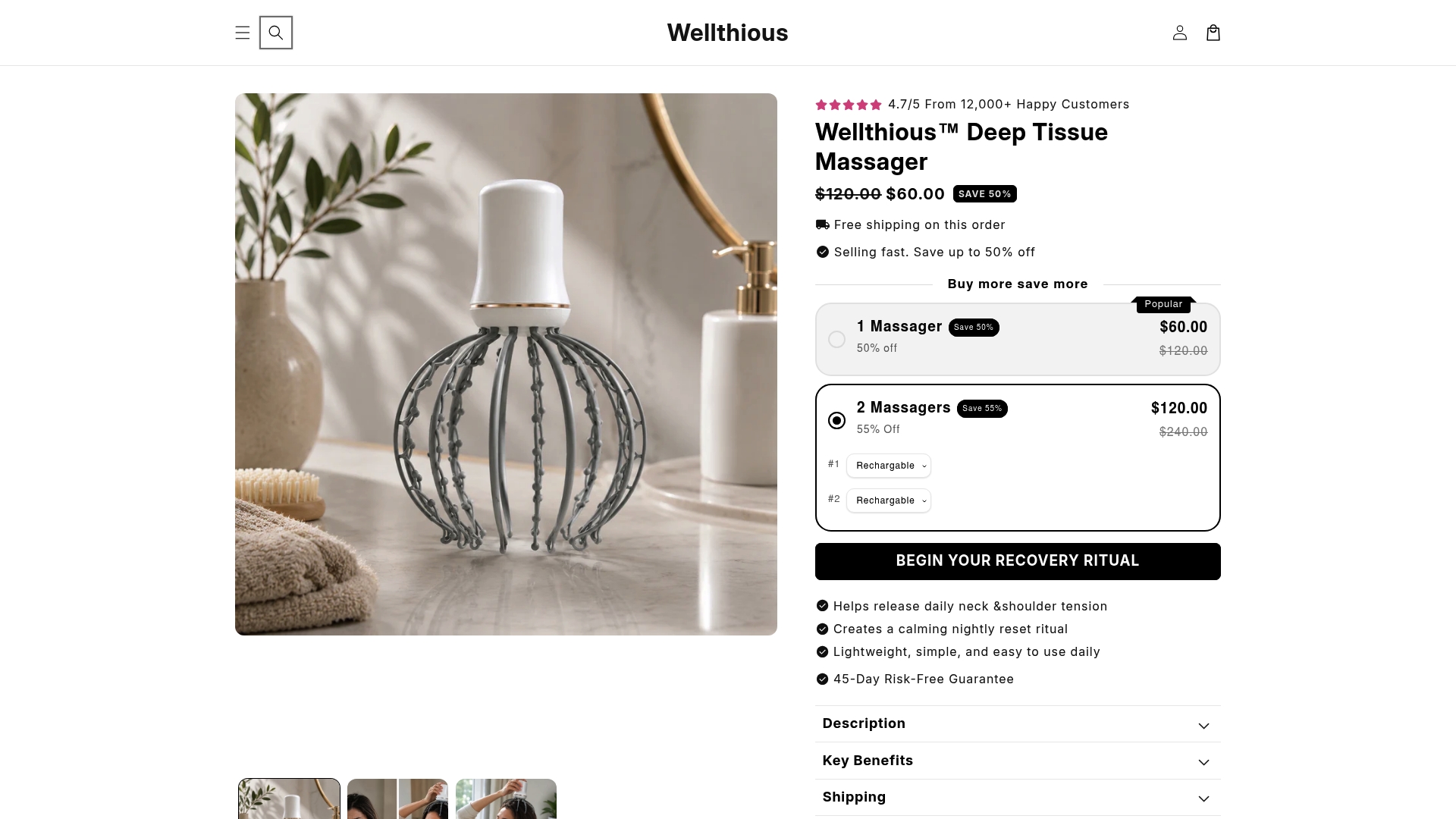
Massage technique matters, but having the right tool can make it easier to stay consistent. The Wellthious™ Reset Ritual Scalp Massager is designed to support gentle daily scalp massage as part of a relaxing self-care routine. For people who also experience tension in the neck, shoulders, or upper back, the Wellthious™ Deep Tissue Massager can complement stretching and other recovery habits. Together, they support a simple, sustainable approach to everyday wellbeing. The Wellthious Deep Tissue Massager improves circulation and releasing tension with each use. For people whose tightness connects to full-body stress, the Wellthious Stress Relief Massager supports muscle relaxation from the neck up. Both tools are designed to complement the massage techniques covered here, making it easier to build a daily habit that actually sticks. Browse the full Wellthious wellness collection to find the right fit for your routine.
FAQ
What does a tight scalp feel like?
A tight scalp feels like pressure, pulling, or a stretched sensation across the crown, temples, or nape. Some people also notice tenderness when touching their hair or scalp.
Can stress alone cause scalp tightness?
Yes. Stress contracts the tiny muscles attached to hair follicles, producing persistent tightness even without any physical cause like a tight hairstyle or harsh shampoo.
How often should I massage my scalp for tension relief?
A daily 5–10 minute massage using fingertip pads in small circular motions is the recommended approach for consistent tension relief and improved circulation.
Why does my scalp feel tight after washing?
The tight feeling after washing is typically caused by sulfates or hard water stripping the scalp’s lipid barrier. Switching to a mild, sulfate-free shampoo and using a shower filter reduces this significantly.
Does scalp tightness affect hair health?
Persistent scalp tension can restrict blood flow to hair follicles over time and contribute to discomfort, causing reduced scalp comfort for some people. While maintaining a healthy scalp environment is important for overall hair health, many factors influence hair growth and hair loss. If you have ongoing scalp pain or significant hair changes, consult a healthcare professional. Addressing tightness through regular massage and stress management supports both scalp comfort and overall hair health.
Final Thoughts
Scalp tightness is often your body’s way of asking for a pause rather than a quick fix. Small daily habits—such as gentle scalp massage, better posture, regular movement, hydration, and moments of relaxation—can gradually help you feel more comfortable over time. The goal isn’t perfection; it’s building simple routines you can maintain consistently as part of your overall wellbeing.