
Yes, daily massage can reduce cortisol levels and activate your body’s relaxation response. The effect works through two main pathways: stimulating the parasympathetic nervous system and boosting mood-enhancing neurotransmitters like serotonin and dopamine. Research shows the cortisol reduction itself is often modest, but the broader stress relief is real and measurable. Here is what the science actually shows:
- Daily massage shifts your nervous system from fight-or-flight to rest-and-digest mode
- It stimulates C-tactile (CT) fibers, specialized nerve endings that respond to gentle touch and signal calm to the brain
- Physiological markers like heart rate, blood pressure, and anxiety scores improve with regular sessions
- Serotonin and dopamine rise, improving mood and reducing pain perception
- Relaxation benefits are both biochemical and experiential, meaning you feel calmer even when cortisol changes are small
What does the science say about massage and cortisol levels?
The research picture is more nuanced than most wellness articles suggest. A meta-analysis of 88 studies with 5,524 participants found that manual therapy reduced systolic blood pressure by 3.91 mmHg, heart rate by 4.20 bpm, and anxiety scores by 9.68 points on the State-Trait Anxiety Inventory. Those are consistent, clinically meaningful numbers.
Cortisol reduction, though, tells a more complicated story. Recent reviews find the cortisol effect size small or statistically insignificant in many studies. A PMC study on Swedish massage found small but consistent decreases in both serum and salivary cortisol after a single session, alongside a notably larger decrease in arginine vasopressin (AVP), a hormone that amplifies the stress response. Twice-weekly massage over five weeks produced more pronounced neuroendocrine changes than once-weekly sessions, suggesting frequency matters.
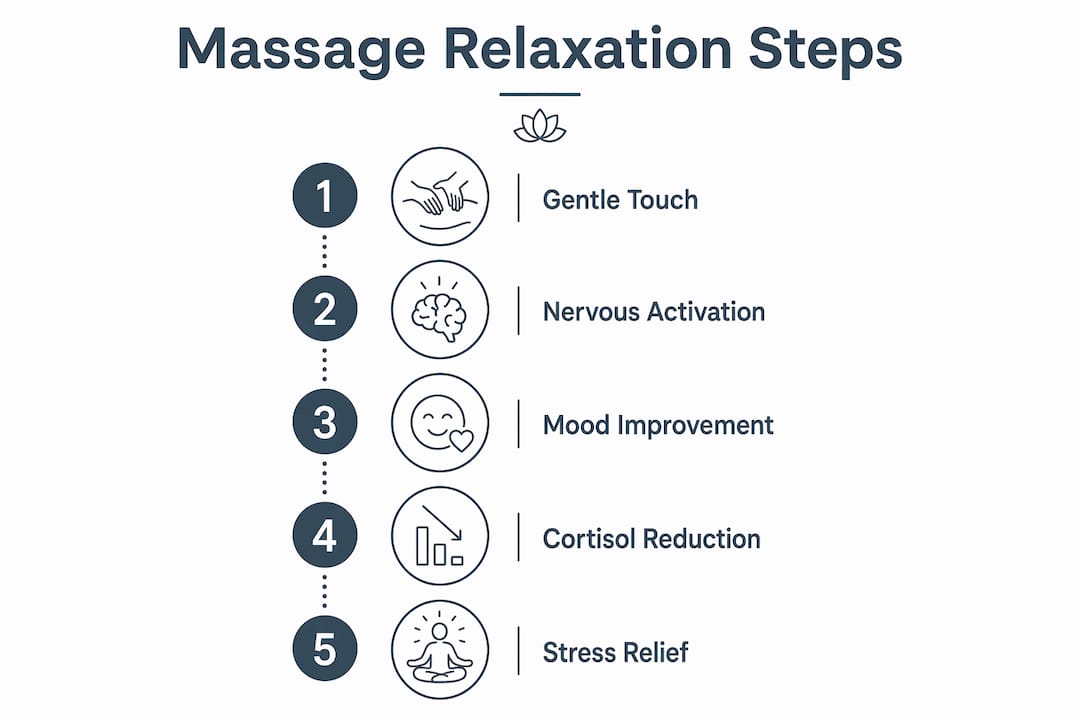
The honest takeaway: mood improvements and calming effects after massage consistently exceed the measurable hormonal changes. Relaxation is driven more by vagal activation and elevated serotonin and dopamine than by cortisol reduction alone.
| Physiological Marker | Change After Massage | Source |
|---|---|---|
| Systolic blood pressure | Decreased by 3.91 mmHg | Frontiers meta-analysis, 88 studies |
| Heart rate | Decreased by 4.20 bpm | Frontiers meta-analysis, 88 studies |
| Anxiety (STAI score) | Decreased by 9.68 points | Frontiers meta-analysis, 88 studies |
| Salivary cortisol | Small decrease (effect size varies) | PMC Swedish massage study |
| Mood and perceived stress | Consistent improvement | Multiple reviews |
Key points from the research:
- Physiological stress markers improve reliably across studies
- Cortisol changes are real but modest; do not expect dramatic hormonal shifts from a single session
- Twice-weekly massage shows stronger neuroendocrine effects than once-weekly sessions
- Anxiety and mood improvements are the most consistent outcomes
How massage activates your relaxation response and nervous system
Massage works on your nervous system in a direct, physical way. When you receive slow, gentle touch, CT fibers in your skin fire signals toward brain regions involved in emotion processing and autonomic regulation. These fibers respond best to caress-like stimuli, which is why light, consistent pressure often outperforms aggressive deep-tissue work for pure stress relief.

The key mechanism is a shift from sympathetic dominance (your fight-or-flight state) to parasympathetic dominance (your rest-and-digest state). The ventral vagus nerve plays a central role here. Massage activates this pathway, releasing trapped muscle tension and resetting the body’s stress baseline. This is why people often feel calmer for hours after a session, not just during it.
Effects your body experiences when the relaxation response activates:
- Heart rate slows and breathing deepens
- Muscle tension releases, especially in the neck, shoulders, and scalp
- Digestion improves as blood flow redirects from muscles to the gut
- Mood lifts as serotonin and dopamine levels rise
- Sleep quality improves with sustained parasympathetic tone
Pro Tip: For maximum parasympathetic activation, keep massage pressure light to moderate. Overly intense pressure can trigger a pain response, which briefly re-engages the sympathetic nervous system and works against relaxation.
What are the emotional and mental benefits of daily massage?
The psychological benefits of regular massage go beyond feeling relaxed in the moment. One-hour massage sessions lower cortisol while boosting serotonin, producing measurable reductions in anxiety and depression symptoms across both clinical and general populations. The emotional impact compounds over time with daily practice.
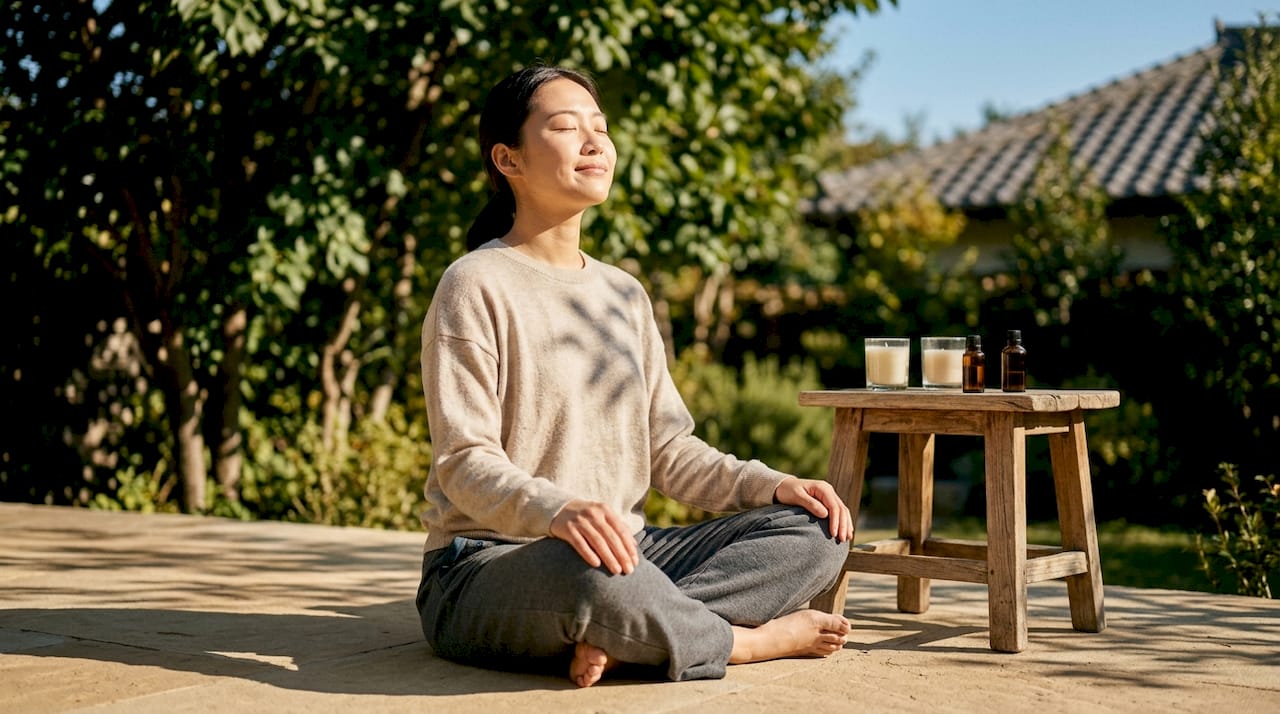
Feeling nurtured and physically cared for also creates a psychological safe space that supports mental well-being in ways that go beyond any single hormone measurement. Regular touch reduces the sense of physical isolation that often accompanies chronic stress.
Emotional and mental benefits supported by research:
- Reduced symptoms of anxiety and depression
- Improved self-image and body awareness
- Greater sense of calm and emotional control
- Better sleep, which further stabilizes mood
- Increased confidence and reduced physical tension that feeds anxious thinking
How to build a daily massage routine that actually relieves stress
Daily massage for stress relief does not require an hour on a professional table. Research supports short, consistent sessions focused on gentle pressure and CT fiber stimulation. Light daily massage targeting areas like the scalp, neck, and shoulders can maintain parasympathetic tone without the recovery time that deep-tissue or sports massage requires.
A practical daily routine looks like this:
- Morning or evening timing. Pick one consistent time. Evening sessions before bed leverage the sleep-improving effects of parasympathetic activation.
- 10–15 minutes per session. Short sessions applied daily outperform occasional long sessions for sustained stress relief.
- Light to moderate pressure. Aim for a pressure level that feels pleasant, not painful. CT fibers respond to gentle, slow strokes.
- Focus on the scalp and neck. These areas carry the highest density of stress-related tension and respond well to scalp massage techniques for head tension relief.
- Combine with breathing. Slow, deep breaths during massage amplify vagal activation and deepen the relaxation response.
- Use a consistent tool for self-massage. Consistency matters more than technique perfection. A device with adjustable intensity lets you control pressure precisely.
A study found that daily 15-minute massages alongside weekly professional sessions reduced arthritis pain by up to 57% in adults, illustrating how daily home practice amplifies professional care. The same principle applies to stress: daily reinforcement keeps your nervous system in a lower-stress baseline state.
The Wellthious Deep Tissue Massager is built for exactly this kind of daily routine. Its 120 massage points and adjustable intensity modes let you target the scalp and neck with the right pressure for parasympathetic activation, cordless and at home.
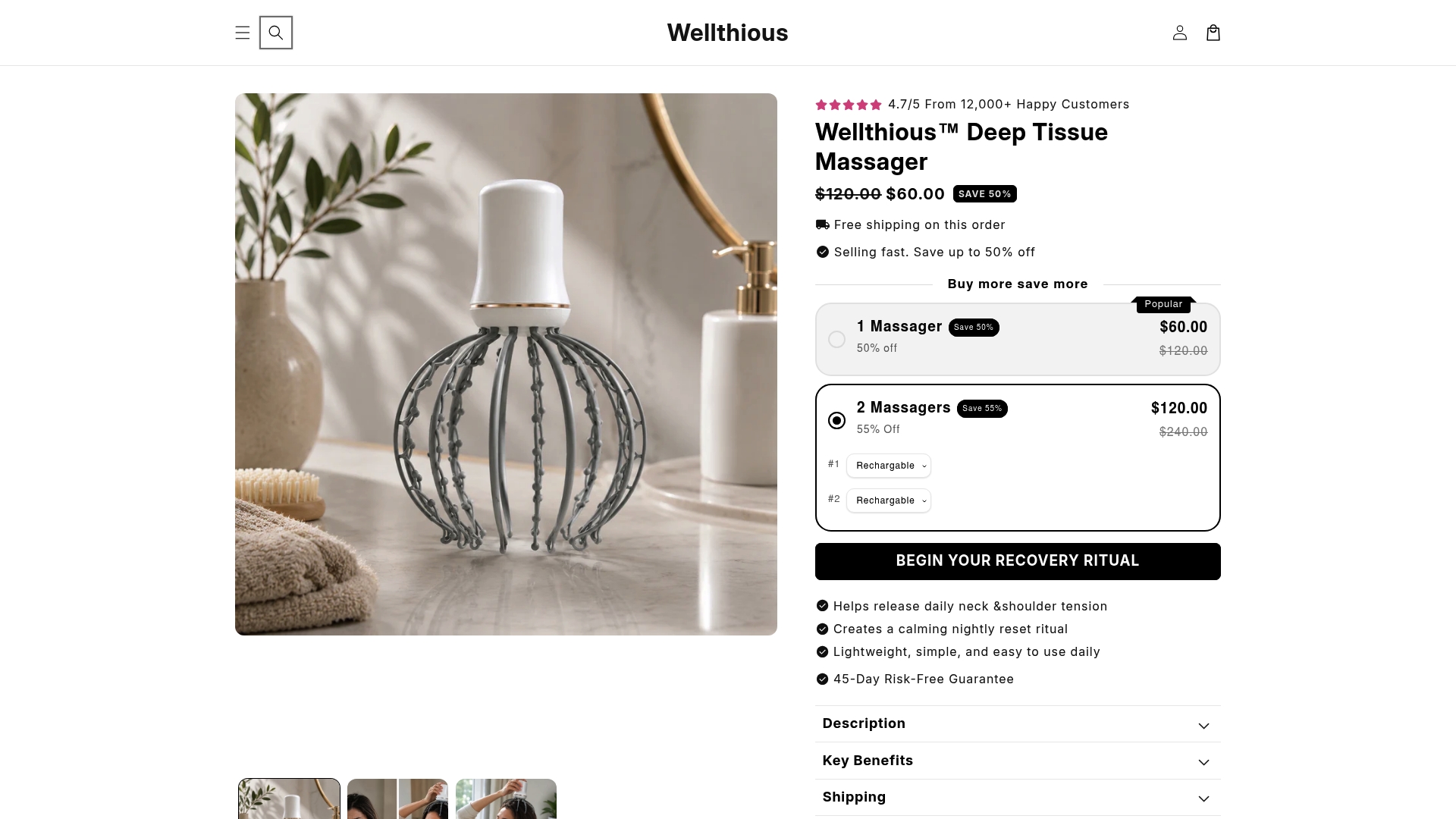
Explore the full range of stress relief tools at Wellthious to find the right fit for your daily routine.
Key Takeaways
Daily massage reduces stress reliably through nervous system activation and neurotransmitter release, with cortisol reduction playing a supporting but secondary role.
| Point | Details |
|---|---|
| Cortisol effect is modest | Cortisol decreases are real but small; mood and anxiety improvements are the stronger, more consistent outcomes. |
| Nervous system shift drives relief | Massage activates the ventral vagus nerve, moving your body from sympathetic to parasympathetic dominance. |
| Frequency matters | Twice-weekly or daily sessions produce stronger neuroendocrine effects than once-weekly massage. |
| Gentle pressure works best | CT fiber stimulation from light, slow touch drives parasympathetic tone without triggering a pain response. |
| Daily short sessions beat occasional long ones | Ten to fifteen minutes daily maintains a lower stress baseline more effectively than infrequent deep sessions. |