
Being stuck in stress mode is defined as a state where your body’s stress response system stays activated long after the original threat has passed, producing persistent physical and emotional symptoms. Clinically, this is called chronic stress activation, and it differs from normal short-term stress the way a car alarm that won’t shut off differs from one that sounds and stops. Your nervous system keeps signaling danger even when none exists. Recognizing the 7 signs your body is stuck in stress mode is the first step toward breaking that cycle. The signs are specific, measurable, and often hiding in plain sight.
What are the 7 signs your body is stuck in stress mode?
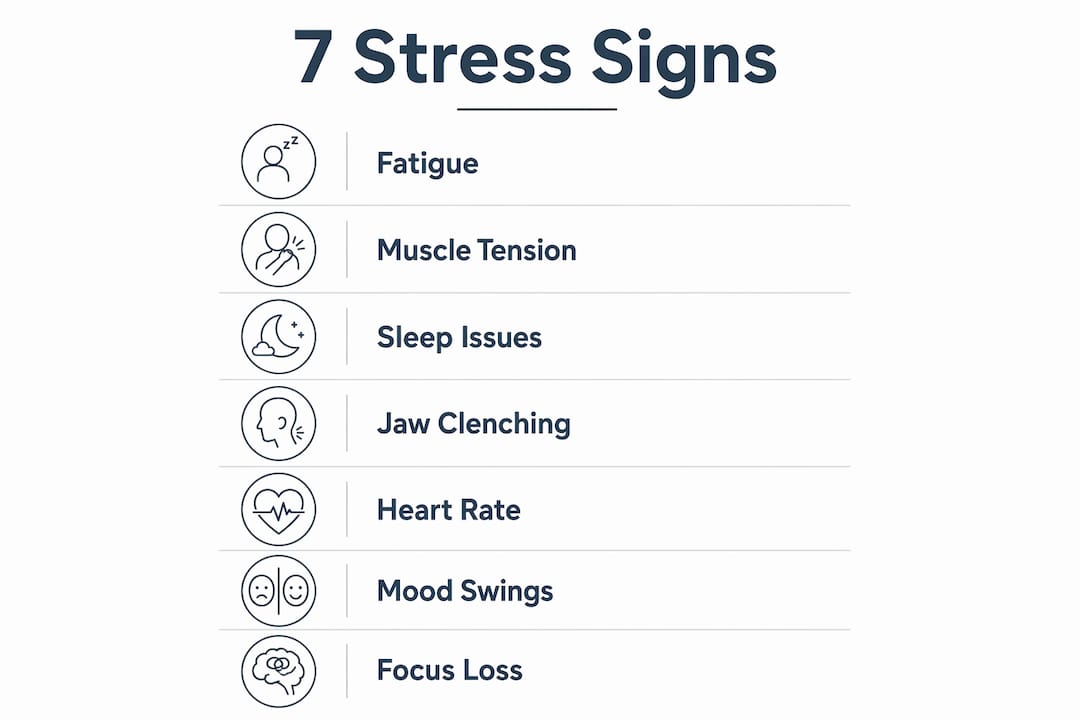
Chronic stress activation produces a predictable set of physical and emotional warning signals. These are not vague feelings of being “off.” They are concrete body stress response signs that follow a clear pattern.
-
Persistent fatigue despite sleep. You sleep seven or eight hours and still wake up exhausted. This happens because stress disrupts sleep architecture over time, preventing the deep, restorative stages your body needs to repair itself.
-
Chronically tight muscles. Tension in your neck, shoulders, and lower back that never fully releases is a textbook stress symptom. Researchers call this tissue armouring, a state of sustained diffuse muscle tension that signals a nervous system on long-term alert.
-
Fragmented or poor-quality sleep. Waking at 2:00 AM or 3:00 AM with a racing mind is a direct sign of elevated cortisol. Your body is treating nighttime like a threat window instead of a recovery window.
-
Heightened emotional reactivity. Snapping at small inconveniences, feeling overwhelmed by routine tasks, or crying without a clear reason are all signs your emotional regulation system is overloaded. The brain under chronic stress has fewer resources available for measured responses.
-
Digestive problems. Chronic stress causes digestive dysfunction, including nausea, constipation, bloating, and stomach upset. The gut and brain share a direct communication line, and when one is in crisis, the other follows.
-
Jaw clenching and tension headaches. Grinding your teeth at night or waking with jaw soreness points to a nervous system that never powers down. Tension headaches that cluster around the temples and base of the skull share the same root cause.
-
Low heart rate variability. Heart rate variability, or HRV, measures the variation in time between your heartbeats. A chronically low HRV reading over days or weeks indicates your autonomic nervous system is struggling to return to a calm baseline.
Pro Tip: Track your jaw tension and sleep quality together. If both are consistently poor, that combination is a stronger stress indicator than either symptom alone.
How does chronic stress affect your body physiologically?

The body’s stress response was designed for short bursts, not extended campaigns. When stress becomes chronic, the system that was built to save your life starts to wear it down instead.
The core mechanism is called allostatic load. This is the cumulative wear on your body from repeated or prolonged stress activation. Each time your nervous system fires a stress response without a full recovery period, it adds to that load. Modern chronic stress shortens or skips recovery periods entirely, causing hormonal shifts, inflammation, and sleep degradation that compound over weeks and months.
One of the most striking physiological findings involves neurological recovery timing. The brain’s shift from alarm mode to reflection mode takes approximately 60 minutes after a stressor ends. That 60-minute window is when the brain’s default-mode network, the system responsible for self-reflection and emotional processing, reaches peak activation. If you move from one stressor directly into the next without that gap, your brain never completes the recovery cycle.
Muscle tension follows its own distinct pattern. Tissue armouring describes sustained muscle tension that does not release between stressors. Unlike soreness from exercise, tissue armouring has no injury driving it. The nervous system is simply holding the muscles in a state of readiness that never gets stood down.
| Physiological system | Effect of chronic stress | Recovery indicator |
|---|---|---|
| Nervous system | Stays in alarm mode; HRV drops | HRV returns to personal baseline over days |
| Muscular system | Tissue armouring; persistent tension | Muscles relax fully at rest |
| Digestive system | Motility disruption; gut inflammation | Regular digestion without cramping |
| Immune system | Suppressed function; slower healing | Normal recovery time from minor illness |
| Sleep architecture | Reduced deep sleep; fragmented cycles | Waking rested after 7–8 hours |
Pro Tip: Give yourself a deliberate 60-minute buffer after a high-stress event before making decisions or starting the next demanding task. Your brain is still in alarm mode until that window closes.
Why do stress symptoms often go unnoticed?
Chronic stress symptoms develop so gradually that the body normalizes them before the mind registers them as a problem. This is one of the most clinically significant features of chronic stress activation. You do not notice the water rising because you have been standing in it for months.
The brain and body adapt to a constant defense posture. Tight shoulders start to feel like your normal resting state. Waking at 3:00 AM feels like just how you sleep. Digestive discomfort becomes background noise. Chronic stress symptoms are frequently normalized, which delays intervention and allows the physiological burden to grow.
“Recovery should be foundational work before goal-setting and coping strategies. A depleted body and mind lack the resources to manage stress effectively, no matter how good the strategy.” Psychology Today, “The Four Rs of Nervous System Recovery”
Chronic stress does not typically cause new diseases from scratch. It worsens existing conditions by elevating the physiological burden on systems already under strain. A person with mild digestive sensitivity may develop a full irritable bowel pattern. Someone prone to tension headaches may find them becoming daily. Recognizing the stress as the driver, not just the symptoms, is what changes the outcome.
How can you tell if your body is stuck in stress mode?
Self-assessment works best when you track patterns over time rather than reacting to single data points. One bad night of sleep proves nothing. Two weeks of fragmented sleep combined with persistent muscle tension and emotional reactivity tells a clear story.
-
Monitor your fatigue pattern. Ask yourself whether you feel rested after a full night of sleep. If the answer is consistently no, that is a meaningful data point, not a one-off.
-
Check your muscles at rest. Sit quietly for five minutes and notice whether your shoulders are raised, your jaw is clenched, or your lower back is tight. Muscles that cannot relax at rest are a physical marker of nervous system activation.
-
Observe your emotional threshold. Notice how you respond to minor frustrations. Disproportionate reactions to small problems signal that your stress buffer is depleted.
-
Use wearable HRV data correctly. A single low HRV reading is not clinically significant. What matters is a pattern of suppressed HRV across multiple days or weeks. Many fitness trackers now display this trend automatically.
-
Consult a healthcare professional. A physician or licensed counselor can assess adrenal function, sleep quality, and nervous system tone through clinical evaluation. Self-assessment is a starting point, not a diagnosis.
What strategies support recovery from chronic stress mode?
Recovery from chronic stress is not passive. It requires deliberate action across multiple systems simultaneously.
-
Exercise as a controlled stress cycle. Exercise rebalances neural circuits of threat appraisal by putting the body through a structured stress-response-recovery cycle. The key is pairing the physical challenge with adequate rest afterward. Exercise without recovery adds to allostatic load rather than reducing it.
-
Protect the 60-minute recovery window. After a stressful event, give your brain the full hour it needs to shift out of alarm mode. A walk, light stretching, or quiet time without screens all support this transition. Jumping straight into the next task cuts the neurological reset short.
-
Prioritize sleep architecture, not just sleep duration. Seven hours of fragmented sleep is not equivalent to seven hours of consolidated sleep. Consistent sleep and wake times, a cool room, and limiting screens before bed all protect the deep sleep stages that chronic stress degrades.
-
Address muscle tension directly. Targeted massage, whether professional or self-administered, reduces tissue armouring and signals the nervous system that the threat has passed. You can reduce stress naturally at home with consistent physical recovery practices.
-
Build social and nutritional support. Chronic stress disrupts immune and cognitive functions and encourages habits that worsen the cycle. Eating regular meals, maintaining social connection, and limiting alcohol all reduce the physiological burden.
-
Seek professional support when patterns persist. If symptoms have been present for more than two to three weeks despite lifestyle adjustments, a healthcare provider can evaluate whether clinical intervention is appropriate.
Pro Tip: Think of recovery as a skill, not a reward. Schedule it the same way you schedule work tasks. The body does not recover by accident.
Key takeaways
Your body stuck in chronic stress mode produces seven specific, trackable signs, and recognizing them early is the most effective way to prevent long-term physiological damage.
| Point | Details |
|---|---|
| Chronic stress has physical markers | Fatigue, muscle tension, poor sleep, and low HRV are measurable signs, not vague feelings. |
| Allostatic load compounds over time | Skipping recovery after each stressor adds wear that accumulates into lasting health effects. |
| The 60-minute window matters | Your brain needs a full hour after stress to shift from alarm mode to recovery mode. |
| Patterns matter more than single readings | Track symptoms over days and weeks, not single events, to accurately assess your stress state. |
| Recovery is active, not passive | Exercise, sleep protection, and targeted muscle work are required to exit chronic stress mode. |
Wellthious’s take on what chronic stress actually looks like
Most people who come to us with stress-related concerns describe the same experience: they did not realize how bad things had gotten until something forced them to stop. The fatigue felt like a personality trait. The tight shoulders felt like posture. The digestive issues felt like diet. None of it felt like stress because stress is supposed to feel dramatic, and chronic stress rarely does.
What I have observed, both in working with customers and in reviewing the current science, is that the body sends clear signals long before a person reaches a breaking point. The signals are just quiet enough to ignore. Tissue armouring, fragmented sleep, and a hair-trigger emotional response are not personality quirks. They are a stress symptoms checklist written in the body’s own language.
The piece of advice I find most underused is the 60-minute recovery window. People treat it as a luxury. It is not. It is the window during which your brain physically reorganizes after stress. Protecting that window, even imperfectly, changes the trajectory of your day and, over time, your health. Pair that with consistent physical recovery work and you are not just managing stress. You are actually unwinding after stressful days in a way that produces lasting change.
The uncomfortable truth is that recovery is not the reward you get after you finish everything else. It is the foundation that makes everything else possible.
— Wellthious
Tools from Wellthious to support your stress recovery
Recognizing the signs is the first step. Taking action on them is the second.
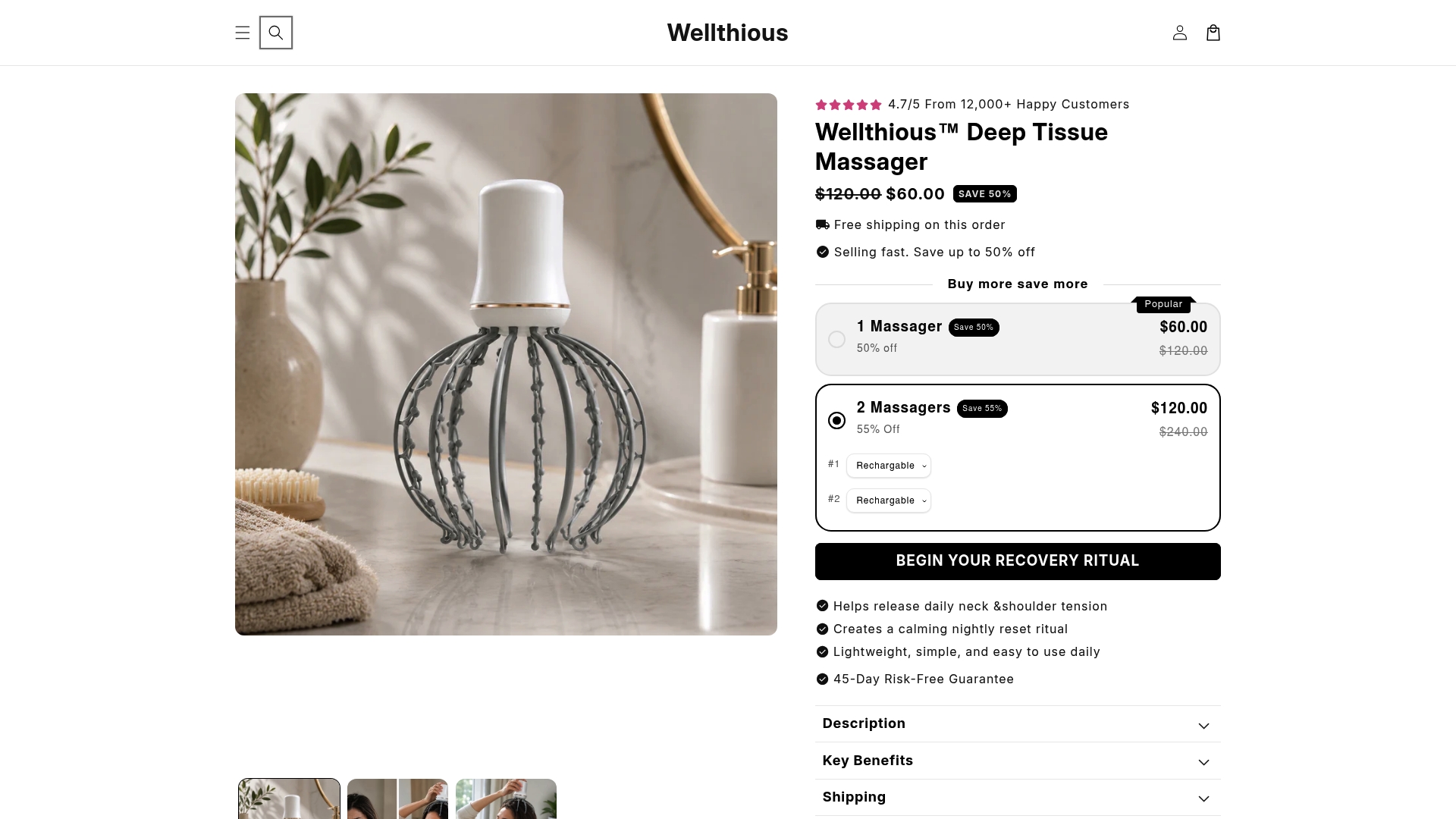
Wellthious designs products specifically for people who need physical recovery support as part of their stress management routine. The Wellthious™ Stress Relief Massager targets the neck, shoulders, and back where tissue armouring concentrates most. The Wellthious™ Deep Tissue Massager goes deeper, supporting the kind of muscle release that signals the nervous system to downshift. Both products are built to complement the lifestyle adjustments described here, giving your body a concrete tool for the physical side of stress recovery. Visit Wellthious to see the full range.
FAQ
What does it mean to be stuck in stress mode?
Being stuck in stress mode means your body’s stress response system remains chronically activated, producing ongoing physical and emotional symptoms even without an active threat. The clinical term for this state is chronic stress activation.
How do I know if my stress is chronic or just temporary?
Temporary stress resolves within hours or days once the stressor passes. Chronic stress produces symptoms, such as persistent fatigue, muscle tension, and sleep disruption, that continue for weeks regardless of external circumstances.
What is heart rate variability and why does it matter for stress?
Heart rate variability measures the time variation between heartbeats and reflects how well your autonomic nervous system shifts between activation and recovery. A chronically suppressed HRV pattern over days or weeks is a reliable indicator that your nervous system is stuck in stress mode.
Can exercise make chronic stress worse?
Exercise can worsen chronic stress if done without adequate recovery. Research shows that exercise rebalances stress-related homeostasis only when paired with sufficient rest. Without recovery, it adds to the body’s allostatic load rather than reducing it.
How long does it take the brain to recover after a stressful event?
The brain’s shift from alarm mode to reflection mode takes approximately 60 minutes after a stressor ends. That window is when neurological recovery peaks, making it the most important period to protect after any high-stress experience.