
What are the best head massagers for stress relief in 2026?
The three standout options for 2026 are the Wellthious™ Stress Relief Massager, the USAGA Head Massager, and the Breo iDream 5S. Each targets stress differently, so the right pick depends on how much tension you carry and what kind of relief you want.
Three key facts set the best models apart: the number of massage points, whether the device uses heat or air compression, and how well it fits into a daily routine. Scalp massagers reduce cortisol and improve sleep quality with regular use, and electric models deliver more consistent blood flow stimulation than manual ones.
| Product | Best For | Stress Relief Effectiveness | Design / Features | Technology Used | User Comfort |
|---|---|---|---|---|---|
| Wellthious™ Stress Relief Massager | Advanced daily stress relief with multifunctionality | Deep tissue pressure across 120 massage points | Cordless, ergonomic, includes AI translation earbuds | Deep pressure vibration, adjustable intensity modes | High; fits multiple head sizes, hands-free use |
| USAGA Head Massager | Gentle, portable scalp tension relief | Gentle tactile stimulation via 36 metal fingers | Compact, fully manual, adjustable prong spread | Manual scratching / kneading motion | Moderate; firm metal may feel intense on sensitive scalps |
| Breo iDream 5S | Spa-level full sensory relaxation at home | Air compression plus heat across head, temples, and eyes | Wrap-around wearable, multiple zones | Air compression, heat therapy, vibration | High; padded interior, customizable modes |
Key standout features at a glance:
- Wellthious™ Stress Relief Massager: 120 massage points, cordless portability, AI earbuds with real-time translation in 40+ languages
- USAGA Head Massager: 36 adjustable metal fingers, zero charging required, fits most head sizes
- Breo iDream 5S: airbag compression, heat therapy, dedicated eye massage zone, multiple preset modes
The Wellthious™ device is the strongest fit for people who want consistent deep-pressure relief they can use anywhere, without being tethered to a wall outlet. The Breo iDream 5S suits those who want a full sensory session at home. The USAGA is the go-to when you want something simple, immediate, and always ready.
Table of Contents
- How do these three models compare in detail?
- What do head massagers actually do for stress and wellbeing?
- What types of head massagers are available?
- How to choose the right head massager for your needs
- What do experts and research say about head massagers for stress?
- How to build head massagers into a stress relief routine
- Price ranges and value for head massagers
- Warranty and customer service considerations
- Where to buy: online vs. physical stores
- What users say: common pros and cons
- Key Takeaways
- Head massagers are more useful than most people expect
- The Wellthious™ Stress Relief Massager delivers where it counts
How do these three models compare in detail?
The comparison above captures the basics. Here is what actually separates them in daily use.
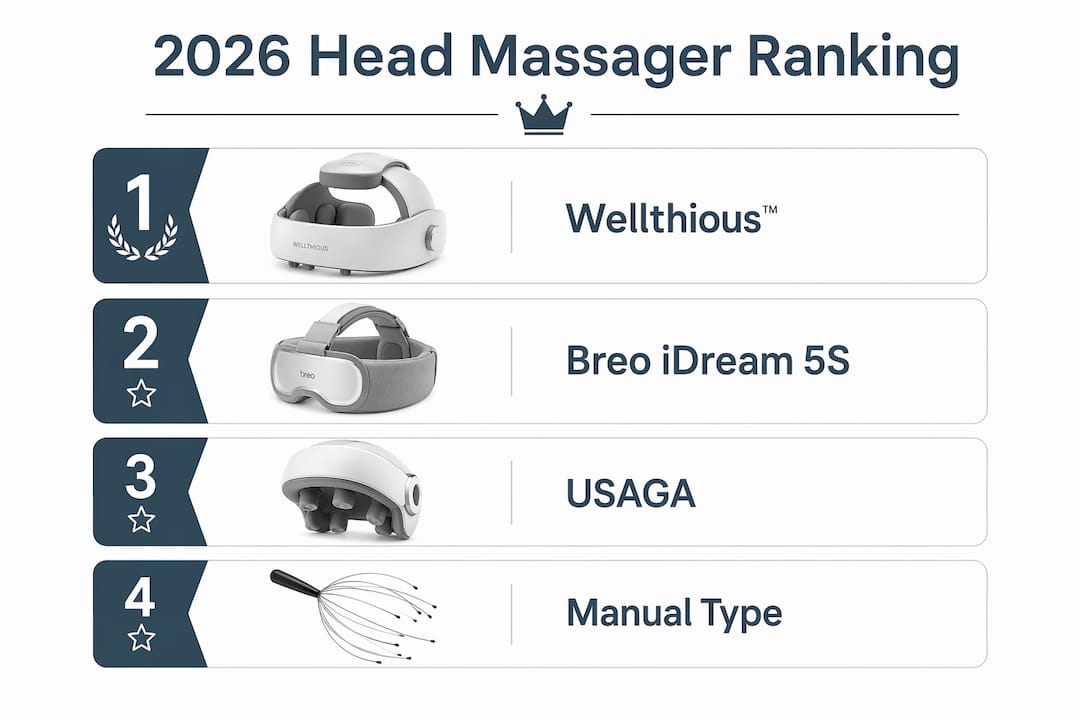
The Wellthious™ Stress Relief Massager covers the scalp with 120 massage points and lets you dial intensity up or down, so you control exactly how much pressure you get. The cordless design means you can use it at your desk, on a flight, or in bed. The built-in AI translation earbuds are a genuine differentiator: they handle hands-free calls and real-time translation in over 40 languages, which makes the device useful well beyond a stress session. For anyone who travels or works across languages, that combination is hard to find elsewhere. Learn more about deep tissue stress relief and how it compares to other approaches.
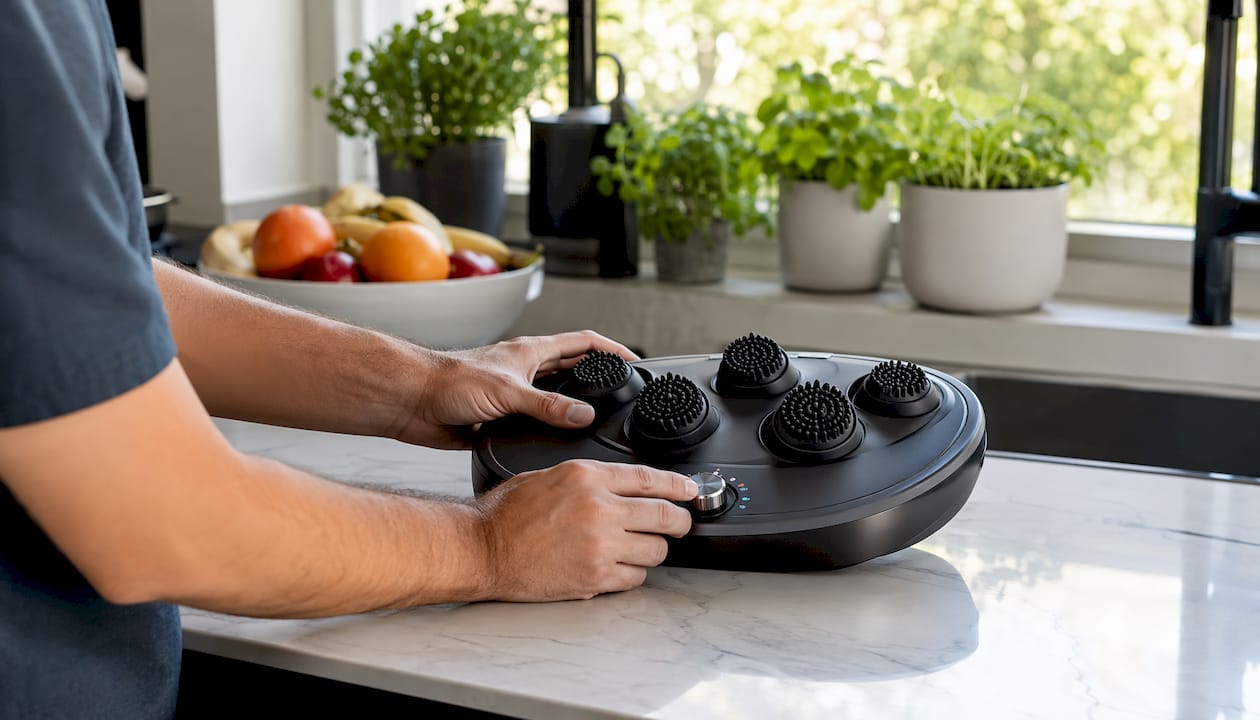
The USAGA Head Massager works on a different principle entirely. Its 36 metal fingers spread across the scalp and mimic the sensation of someone gently scratching your head. There is no charging, no settings, and no learning curve. The adjustable prong spread accommodates different head sizes. The trade-off is consistency: the pressure you feel depends entirely on how you move the device, and the firm metal construction can feel uncomfortable if your scalp is sensitive.
The Breo iDream 5S takes the most immersive approach. It wraps around your head and uses air compression to squeeze gently at the temples and crown while heat therapy warms the surrounding tissue. The eye massage zone targets a tension area most scalp massagers ignore entirely. Positioning massagers at the temples and occipital region triggers the parasympathetic calming response more effectively than focusing only on the top of the scalp, and the Breo iDream 5S is built around exactly that principle. The downside is size: it is a wrap-around device designed for home use, not something you slip into a bag.
What do head massagers actually do for stress and wellbeing?
Scalp massage promotes blood flow, increases oxygen delivery to the scalp, and produces calming rhythmic sensations that reduce tension-type headaches. The physical effect on cortisol is real: user reports and studies cite reduced stress hormone levels and better sleep after regular use.
Dermatologists point to a less obvious benefit and recommend methods to improve scalp health for regrowth. Scalp massagers remove product buildup and loosen oil and flakes that cause scalp tightness, a sensation many people mistake for stress-related tension. Clearing that buildup produces both physical and sensory relief. As Dr. Rachel Nazarian, a New York-based dermatologist and fellow of the American Academy of Dermatology, notes, scalp massagers “can improve blood circulation in the scalp” at minimum, with broader benefits depending on the individual.
Sleep quality is another documented benefit. Regular sessions help the nervous system shift into a calmer state, which carries over into how quickly and deeply you sleep. For anyone managing chronic stress, that downstream effect on sleep can matter as much as the immediate tension relief.
Core benefits of regular scalp and head massage:
- Reduced cortisol and stress hormone levels
- Improved blood circulation and oxygen delivery to the scalp
- Relief from tension-type headaches
- Looser, cleaner scalp with less tightness from buildup
- Better sleep quality over time
- Activation of the parasympathetic nervous system, especially when pressure targets the temples and occipital region
Pro Tip: Use your massager for 10–15 minutes before bed rather than first thing in the morning. The parasympathetic response it triggers takes a few minutes to build, and ending a session right before sleep gives that calming effect the best chance to carry you into rest.
What types of head massagers are available?
Three main categories cover the market in 2026, and each works through a different mechanism.
Manual scalp scratchers like the USAGA use metal or silicone fingers that you move by hand across the scalp. The sensation mimics gentle scratching, which stimulates nerve endings and increases local blood flow. They are portable, require no power, and are nearly impossible to break. The limitation is that the pressure and coverage depend entirely on how you use them, so results vary.
Electric vibrating massagers use rotating nodes or vibrating heads to deliver consistent stimulation. Electric models achieve more consistent blood flow stimulation than manual ones, and many include adjustable speed settings so you can move from a gentle buzz to a deeper kneading sensation. The Wellthious™ Stress Relief Massager falls into this category, with the added layer of adjustable intensity modes and 120 contact points for broad scalp coverage.
Multifunctional wrap-around devices like the Breo iDream 5S combine air compression, heat therapy, and vibration in a single wearable unit. Multifunctional devices combining scalp, temple, and eye massage with heat and airbags are better suited for chronic stress than simple scratchers, and that reflects where the 2026 market is heading. The trade-off is size and price: these devices are larger, less portable, and cost more.
- Manual scratchers: best for portability and simplicity; limited by user technique
- Electric vibrating massagers: consistent stimulation, adjustable intensity, cordless options available
- Wrap-around multifunctional devices: broadest coverage, heat and compression included, primarily for home use
How to choose the right head massager for your needs
Start with your primary use case. If you need something you can use at a desk or while traveling, a cordless electric massager or a manual scratcher makes more sense than a wrap-around device. If your sessions happen at home and you want the most thorough relief, a multifunctional device with heat and air compression is worth the investment.
Features to evaluate before buying:
- Massage modes and intensity controls: more options let you adapt the session to how tense you feel that day
- Heat function: adds muscle relaxation on top of the mechanical stimulation
- Portability: cordless and lightweight designs travel well; wrap-around devices generally do not
- Safety features: auto shut-off timers prevent overuse during longer sessions
- Ease of cleaning: silicone nodes rinse easily; fabric-covered devices require more care
Ergonomic design matters more than it sounds. A device that fits awkwardly in your hand or slips off your head mid-session is one you will stop using. Look for adjustable straps or prong spreads that accommodate your head size.
Overstimulating the scalp by applying too much pressure or exceeding recommended session length can cause micro-abrasions or hair pulling. Experts recommend starting with low-intensity modes and working up gradually.
Pro Tip: If you are new to electric massagers, start with low intensity and short duration sessions to help your scalp adapt. Your scalp needs time to adapt, and starting low prevents the overstimulation that makes some people give up on these devices entirely.
Cleaning is a practical factor that often gets overlooked. Cleaning silicone nodes regularly with mild soap and drying them before charging prevents bacterial buildup and extends the device’s lifespan. Moisture causes electrical failures in devices that are not fully waterproof, so check the waterproofing rating before using any electric massager in the shower.
What do experts and research say about head massagers for stress?
The evidence base for scalp massage is growing, and dermatologists are increasingly comfortable recommending these devices as part of a self-care routine, with clear caveats about realistic expectations.
“Scalp massagers can improve blood circulation in the scalp, and at the very least, that benefit is consistent across users. Improved delivery of oxygen and nutrients to the hair follicles can help them function to the best of their ability.” — Dr. Joshua Zeichner, MD, Director of Cosmetic and Clinical Research in Dermatology, Mount Sinai Hospital, New York City
Dermatologists recommend scalp massagers for circulation, oil distribution, and tension relief, not as medical treatments for stress disorders. That framing is useful: these devices work best as consistent self-care tools, not emergency interventions.
The nerve pathway research adds a specific, actionable insight. Focusing pressure on the temples and occipital region engages the parasympathetic nervous system more effectively than concentrating only on the top of the scalp. High-end devices include temple-specific pressure airbags for exactly this reason. If your device does not reach the temples, you are leaving the most calming nerve pathways unstimulated.
The 2026 market trend reflects this science. Multifunctional head massagers treating the scalp, temples, and eyes simultaneously with air compression and heat are preferred for managing chronic stress, while simple scratchers remain popular for occasional, portable relief. Multiple massage modes and auto shut-off features enhance the experience and help prevent overstimulation, which is the most common reason people stop using these devices.
How to build head massagers into a stress relief routine
Consistency matters more than session length. A 10-minute session three or four times a week produces more lasting results than a 30-minute session once a week. The nervous system responds to repeated, predictable signals, and regular use trains that calming response to activate more quickly over time.
Pair your massager with an existing habit to make it stick. Use it while listening to a podcast, during a wind-down routine before bed, or at a set break time during the workday. The USAGA is easy to keep at a desk for a quick mid-afternoon session. The Wellthious™ Stress Relief Massager works well during commutes or travel, especially with its built-in earbuds handling audio at the same time. The Breo iDream 5S fits naturally into an evening routine where you have 15–20 minutes to sit quietly.
Combine scalp massage with natural tension relief strategies for a more complete approach. Deep breathing during a massage session amplifies the parasympathetic response the device triggers. Staying hydrated and limiting screen time before bed also supports the sleep benefits that regular massage builds over time.
Price ranges and value for head massagers
Head massagers in the US market span a wide range, and price generally tracks with technology complexity.
Manual scalp scratchers like the USAGA sit at the low end of the market, typically under $20. They offer no electronics, no charging, and no settings, but they deliver genuine tactile relief and last for years without maintenance costs.
Mid-range electric massagers, including the Wellthious™ Stress Relief Massager, occupy the space where most buyers find the best balance of features and value. Cordless operation, adjustable intensity, and a meaningful contact-point count are standard at this tier. The Wellthious™ device adds AI translation earbuds, which extends its utility well beyond stress relief and makes the price point easier to justify for frequent travelers and professionals.
Premium wrap-around devices like the Breo iDream 5S sit at the higher end. Air compression systems, heat therapy, and multi-zone coverage add manufacturing cost, and that shows in the retail price. For someone who uses the device daily and values the spa-level experience, the per-session cost over time is reasonable. For occasional use, the value calculation is harder to make.
The honest advice: buy the most feature-rich device you will actually use regularly. A premium device that sits in a drawer is worse value than a $15 manual scratcher you reach for every day.
Warranty and customer service considerations
Warranty terms vary significantly across this category, and they matter more for electric devices than for manual ones. A manual scratcher has almost nothing to break. An electric massager with a motor, battery, and heating element has multiple failure points.
Look for a minimum one-year warranty on any electric device. Some brands offer 18-month or two-year coverage, which is worth paying a small premium for. Check whether the warranty covers battery degradation specifically, since battery capacity loss is the most common long-term issue with rechargeable wellness devices.
Customer service responsiveness is harder to evaluate before purchase. Reading recent reviews for mentions of warranty claims gives a realistic picture of how a brand handles problems. Wellthious backs its products with direct customer support, which matters when you are buying a device you plan to use daily. Buying through a major retailer like Amazon also adds a return window that acts as a practical safety net if the device does not meet your expectations in the first 30 days.
Where to buy: online vs. physical stores
Online retailers offer the widest selection and the most competitive pricing for head massagers. Amazon carries all three featured models and provides verified buyer reviews that help you assess real-world performance. Wellthious sells the Wellthious™ Stress Relief Massager directly through its product page, which gives you access to the full product description, bundle options, and direct customer support.
Physical stores like Target carry a narrower range, mostly manual and basic electric options. The advantage of buying in person is that you can assess the build quality and weight before committing. For a device you will wear on your head, that tactile check has real value. The trade-off is that premium models like the Breo iDream 5S are rarely stocked in physical retail and are almost always purchased online.
For first-time buyers, buying online from a retailer with a clear return policy reduces the risk. If the device does not feel right on your scalp or the intensity is not what you expected, a straightforward return process makes the purchase decision much easier.
What users say: common pros and cons
User feedback across the three featured models shows consistent patterns.
The Wellthious™ Stress Relief Massager earns consistent praise for its cordless convenience and the depth of pressure its 120 massage points deliver. Users who travel frequently highlight the AI translation earbuds as a feature they did not expect to use as much as they do. The most common critique is that first-time users sometimes start at too high an intensity and find the sensation overwhelming before they adjust.
The USAGA Head Massager is widely described as satisfying and immediately effective for quick scalp tension relief. Its simplicity is its main selling point: no charging, no settings, no setup. The consistent criticism is that the metal construction feels too firm for people with scalp sensitivity, and the relief it provides is shorter-lived than what electric devices deliver.
The Breo iDream 5S draws strong positive feedback for its full sensory experience, particularly from people who carry tension in their temples and around their eyes. Users describe the air compression as surprisingly effective. The most frequent complaint is the size: it is not a device you can use discreetly or carry easily, and some people find the wrap-around fit takes a few sessions to feel natural.
Pro Tip: Read the one-star and two-star reviews for any massager you are considering. They reveal the failure modes: which parts break first, whether the battery degrades quickly, and how the brand responds to problems. That information is more useful than the average rating.
Key Takeaways
The most effective head massagers for stress relief in 2026 combine targeted nerve pathway stimulation, adjustable intensity, and consistent daily use to reduce cortisol and improve sleep quality.
| Point | Details |
|---|---|
| Temple and occipital focus matters | Targeting these nerve pathways triggers the parasympathetic response more effectively than scalp-only massage. |
| Session length has a ceiling | Experts recommend limiting session length to avoid scalp irritation or overstimulation. |
| Electric beats manual for consistency | Electric massagers deliver more consistent blood flow stimulation than manual scratchers, especially for chronic stress. |
| Multifunctional devices lead in 2026 | Devices combining heat, air compression, and multi-zone coverage are the preferred choice for managing ongoing stress. |
| Wellthious™ for daily portable relief | The Wellthious™ Stress Relief Massager’s 120 massage points, cordless design, and AI earbuds make it the strongest pick for active daily use. |
Head massagers are more useful than most people expect
The conventional take on head massagers is that they are a nice-to-have, something you use once in a while when a headache hits. That framing undersells what consistent use actually does. The real value is not the single session. It is the cumulative effect on how your nervous system responds to stress over weeks of regular use.
What most guides miss is the positioning point. You can use a perfectly good massager and get mediocre results simply because you are focusing it on the wrong part of your head. The top of the scalp feels satisfying, but the temples and the base of the skull are where the calming nerve pathways actually run. A device that reaches those areas, or a technique that prioritizes them, produces noticeably different results.
The other underappreciated factor is the cleaning and maintenance routine. Electric massagers that are not dried properly before charging fail faster than they should, and a device that stops working after six months is not a stress relief tool. It is a source of frustration. Treat maintenance as part of the routine, not an afterthought.
For 2026, the Wellthious™ Stress Relief Massager stands out not because it is the most expensive option, but because it solves the portability problem that keeps most people from using their massager consistently. You can read more about scalp tension and how to address it to build a fuller picture of what is happening when your head feels tight.
The Wellthious™ Stress Relief Massager delivers where it counts
120 massage points, adjustable intensity, and a cordless design that goes wherever you go. That combination covers the two biggest reasons people stop using head massagers: inconsistent pressure and inconvenient charging. The Wellthious™ Stress Relief Massager solves both.
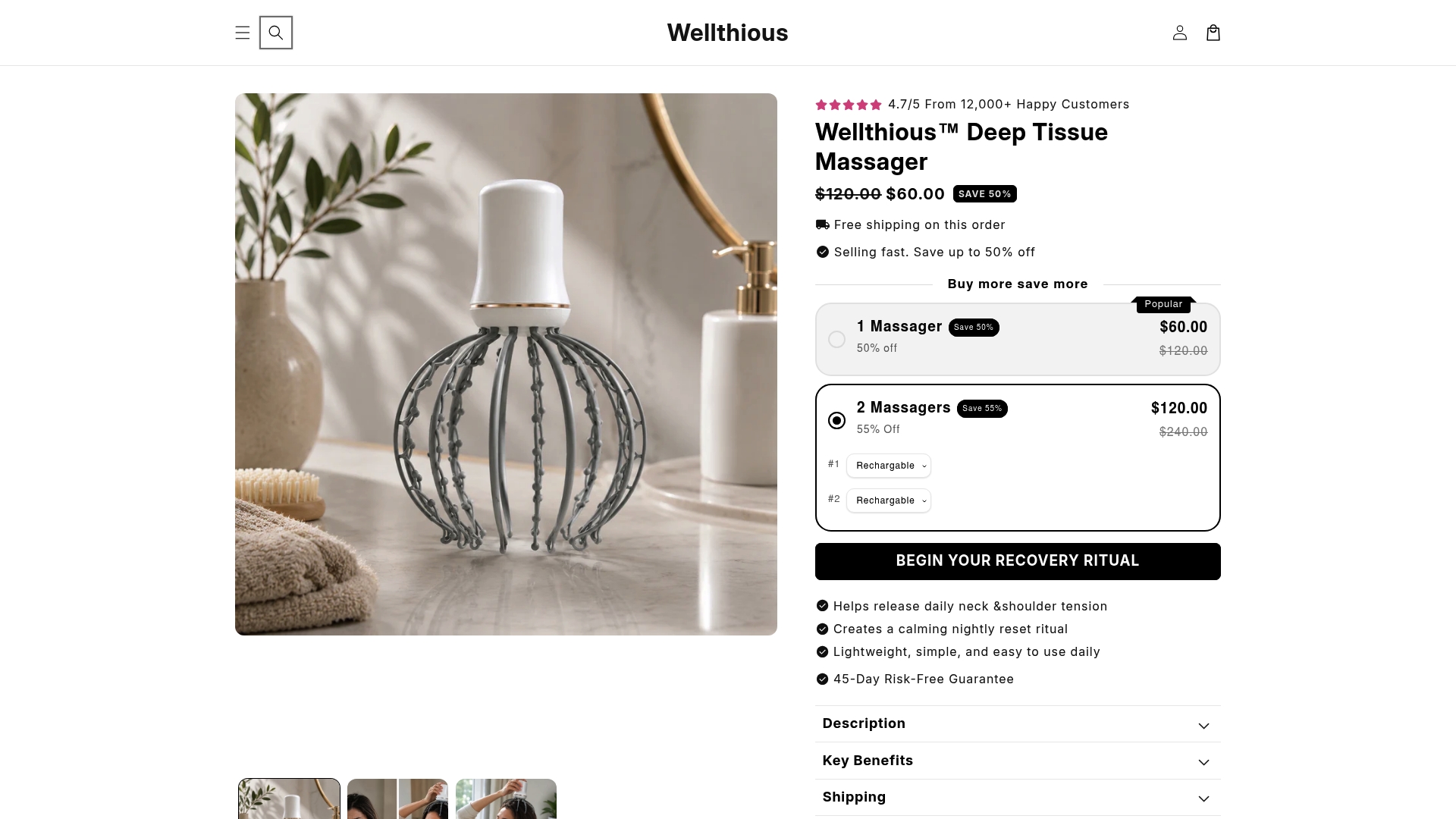
The built-in AI translation earbuds handle hands-free calls and real-time translation in 40+ languages, so the device earns its place in your bag even on days when stress is not the priority. It is a wellness tool and a travel tool in one unit. Dermatologist-endorsed scalp massage principles are built into the design, with enough intensity control to start gentle and work up as your scalp adapts.
Visit the Wellthious™ Stress Relief Massager page to see the full feature breakdown and place your order directly. If you want to explore the full Wellthious wellness range, the product collection covers everything in one place.