
Tension headaches are defined as a dull, pressing pain that wraps around the head, often caused by muscle tightness in the scalp, neck, and shoulders. Relieving head tension naturally without medication involves lifestyle adjustments and simple therapies that reduce muscle tightness, improve blood flow, and manage stress effectively. These non-medication approaches are not just alternatives to painkillers. They address the root causes that make tension headaches recur. Frequent or prolonged use of some over-the-counter pain relievers may contribute to medication-overuse headaches. If headaches are frequent or persistent, it’s important to speak with a healthcare professional. Making natural, drug-free techniques the safer long-term choice. The ten evidence-based methods covered here draw from clinical guidance by the Cleveland Clinic and Mayo Clinic, and they work best when practiced consistently rather than reactively.
How does hydration prevent and relieve head tension naturally?
Dehydration is one of the most common and most overlooked triggers of tension headaches. When your body lacks adequate fluid, blood volume drops, reducing oxygen delivery to the brain and causing the characteristic dull, squeezing pain. The fix is straightforward, but the timing matters.
Men need approximately 104 ounces of fluid per day, while women need approximately 73 ounces. That is roughly 13 cups for men and 9 cups for women, spread across the entire day. Reaching for water only when a headache starts misses the prevention window entirely.
Practical steps to stay ahead of dehydration:
-
Start each morning with a full glass of water before coffee or food.
-
Set a phone reminder every 90 minutes to drink at least 8 ounces.
-
Eat water-rich foods like cucumber, watermelon, and celery throughout the day.
-
Track your intake with a marked water bottle so you can see your progress at a glance.
-
Reduce caffeine and alcohol, both of which accelerate fluid loss.
Pro Tip: If your urine is darker than pale yellow, you are already mildly dehydrated. Drink 16 ounces immediately and reassess your daily intake routine.
Consistent fluid intake prevents headache triggers far more reliably than reactive hydration after symptoms appear. Think of water as a daily maintenance habit, not a remedy.
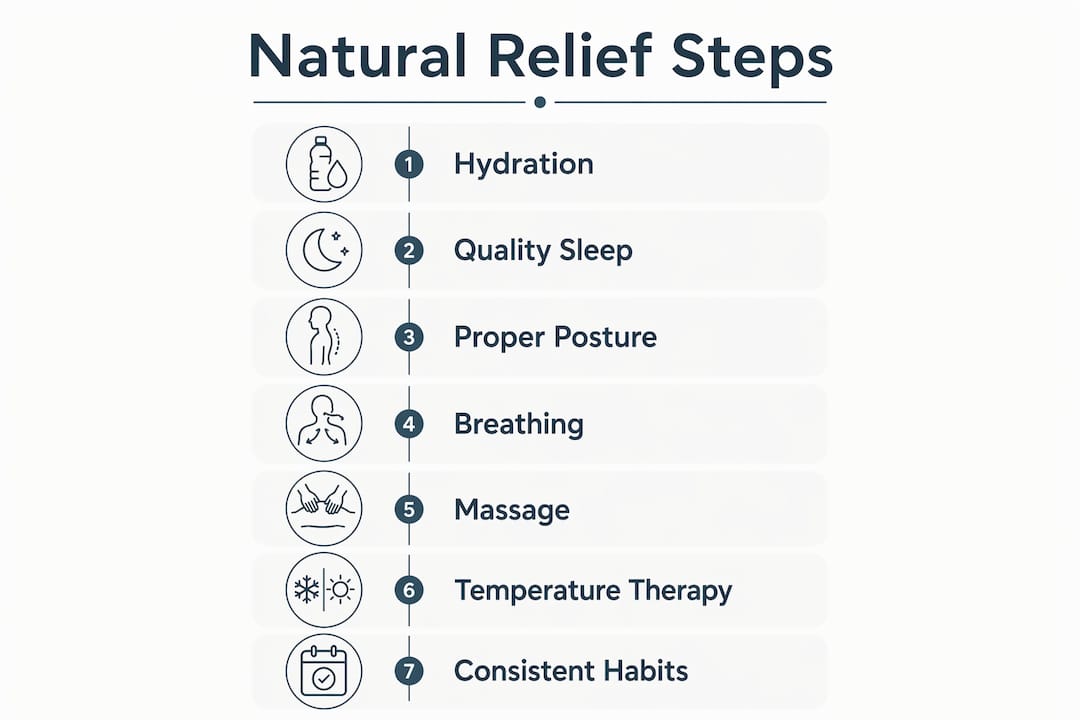
Does sleep quality affect head tension?
Poor sleep is a direct driver of tension headaches. During deep sleep, your body repairs muscle tissue, regulates stress hormones, and resets the nervous system. Cutting that process short leaves muscles tighter and pain thresholds lower the next day.
Adults need at least 7 hours of restorative sleep per night to reduce susceptibility to tension-related pain. The word “restorative” matters here. Seven hours of fragmented or shallow sleep does not deliver the same benefit as seven hours of uninterrupted rest.
Habits that improve sleep quality for tension relief:
-
Go to bed and wake up at the same time every day, including weekends.
-
Keep your bedroom cool, dark, and free of screens for at least 30 minutes before sleep.
-
Use a supportive pillow that keeps your neck aligned with your spine.
-
Avoid large meals or vigorous exercise within two hours of bedtime.
Pro Tip: A cervical contour pillow keeps your neck in a neutral position overnight. This small change reduces the morning neck stiffness that often triggers daytime head tension.
Consistent sleep timing trains your body’s circadian rhythm, which directly affects how your muscles recover and how your nervous system handles stress the next day.
How does posture affect tension headaches?
Poor posture is a primary mechanical cause of tension headaches. Sitting with your head pushed forward, shoulders rounded, or hips misaligned places sustained strain on the muscles of the neck and upper back. That strain travels upward and creates the familiar band of pressure around the skull.

Maintaining 90-degree angles at the knees and hips while seated, combined with hourly movement breaks, reduces the muscle tension that triggers headaches. The table below shows how static versus active posture habits compare in their effect on head tension.
| Posture habit | Effect on head tension |
|---|---|
| Sitting for 2+ hours without moving | Increases neck and shoulder muscle strain significantly |
| 90-degree knee and hip alignment | Reduces spinal load and upper body muscle fatigue |
| Screen at eye level | Prevents forward head posture and cervical strain |
| Hourly 5-minute movement break | Resets muscle tension and improves circulation |
| Shoulder rolls and chin tucks | Releases accumulated tension in the upper trapezius |
Pro Tip: Set a recurring timer for every 50 minutes. Stand, roll your shoulders back five times, and do three slow chin tucks. This takes under two minutes and prevents the muscle buildup that causes afternoon head tension.
Prolonged static posture is one of the most underestimated contributors to chronic tension headaches. Small, frequent corrections throughout the day outperform any single stretch session at the end of the day.
Can breathing exercises and mindfulness reduce head tension?
Stress activates the body’s fight-or-flight response, which tightens muscles throughout the neck, jaw, and scalp. That sustained tightness is a direct pathway to tension headaches. Breathing exercises and mindfulness interrupt this cycle at the source.
Behavioral techniques like mindfulness, yoga, and progressive muscle relaxation work best when practiced regularly rather than only when a headache has already started. Reactive use provides some relief, but consistent daily practice reduces how often headaches occur in the first place.
Techniques that deliver measurable results:
-
Diaphragmatic breathing: Inhale slowly for four counts, hold for four, exhale for six. Repeat five times. This activates the parasympathetic nervous system and lowers muscle tension within minutes.
-
Progressive muscle relaxation (PMR): Tense and release each muscle group from feet to scalp. PMR teaches your body to recognize and release held tension before it becomes pain.
-
Mindfulness meditation: A daily 10-minute session focused on breath awareness will help in reducing cortisol levels and lowers baseline muscle tension over time.
-
Yoga: Poses like child’s pose, cat-cow, and thread-the-needle directly stretch the neck and upper back muscles most responsible for tension headaches.
The key distinction between reactive and preventive use is frequency. Practicing these techniques daily, even on headache-free days, builds a lower baseline of muscle tension. You can also reduce stress naturally at home by combining these techniques with other lifestyle habits for stronger results.
How do scalp massage and temperature therapy ease head tension?
Scalp massage and temperature therapies work through two distinct but complementary mechanisms. Massage alters blood flow and releases muscle tightness directly. Temperature therapy targets inflammation and muscle spasm in the surrounding tissue.
Gently massaging the temples changes cranial blood flow and provides immediate natural relief when a tension headache starts. This is not a placebo effect. Pressure applied to the temples stimulates local circulation, which reduces the vascular component of head pain within minutes.
Temperature therapy adds another layer of relief:
-
Apply a cold pack to the forehead to constrict blood vessels and numb sharp pain.
-
Use a warm compress on the neck and shoulders to relax tight muscles and improve circulation.
-
Combining cold and warm therapy with gentle stretching reduces muscle strain more effectively than rest alone.
The Wellthious™ Stress & Tension Relief Massager is designed to support this approach. It delivers targeted vibration and pressure to the scalp and neck, replicating the benefits of manual temple and scalp massage without requiring a partner or a clinic visit. Used for 10 to 15 minutes during a tension episode, it complements the hydration, sleep, and posture habits described throughout this article.
Pro Tip: For scalp massage, use slow circular motions starting at the temples and moving toward the base of the skull. Apply firm but comfortable pressure. Three to five minutes is enough to produce a noticeable shift in tension.
You can also explore scalp massager options for relaxation to find the right tool for your routine. Combining massage with temperature therapy gives you two evidence-based tools working together, which is more effective than either approach alone.
Key Takeaways
Combining multiple natural strategies yields the best long-term results for reducing tension headaches, making daily consistency more valuable than any single technique.
| Point | Details |
|---|---|
| Hydration is foundational | Men need 104 oz and women need 73 oz of fluid daily to prevent dehydration-triggered headaches. |
| Sleep quality matters | At least 7 hours of restorative sleep per night lowers muscle tension and pain sensitivity. |
| Posture and movement | Hourly breaks and 90-degree seated alignment reduce the neck strain that causes head tension. |
| Mindfulness works preventively | Daily practice of PMR, deep breathing, or meditation lowers baseline tension more than reactive use. |
| Massage and temperature therapy | Temple massage and combined cold and warm compresses provide immediate, evidence-backed relief. |
What Wellthious has learned about lasting tension relief
The most common mistake people make with tension headaches is treating them as isolated events. A headache appears, they reach for a quick fix, and the cycle repeats. What actually breaks the cycle is identifying the upstream cause, whether that is chronic dehydration, poor sleep posture, or unmanaged workplace stress, and addressing it daily.
Wellthious has seen this pattern consistently. People who commit to a morning hydration habits, a consistent sleep schedule, and a short daily mindfulness practice report fewer headaches within two to three weeks. They are not doing anything dramatic. They are removing the conditions that make tension headaches inevitable.
The role of wellness tools like the Wellthious™ Stress & Tension Relief Massager is not to replace these habits. It is to make the physical relief component easier to access and more consistent. A five-minute scalp massage session at the end of a stressful workday, combined with a warm compress on the neck, is a ritual that compounds over time. The greatest benefits often come from consistency rather than intensity. The relief you feel on day one is real. The relief you feel on day 30 is deeper, because your baseline tension has dropped. Each day can become meaningful habits that support long-term recovery and overall wellbeing.
The uncomfortable truth about non-medication tension relief is that it requires patience. The techniques work. The research is clear. But they work best when they become part of your daily structure, not something you remember only when the pain is already there.
— Wellthious
Wellthious wellness tools for natural tension relief
Head tension responds best to a consistent daily routine, not a single fix. Wellthious designs products that make that routine easier to maintain.
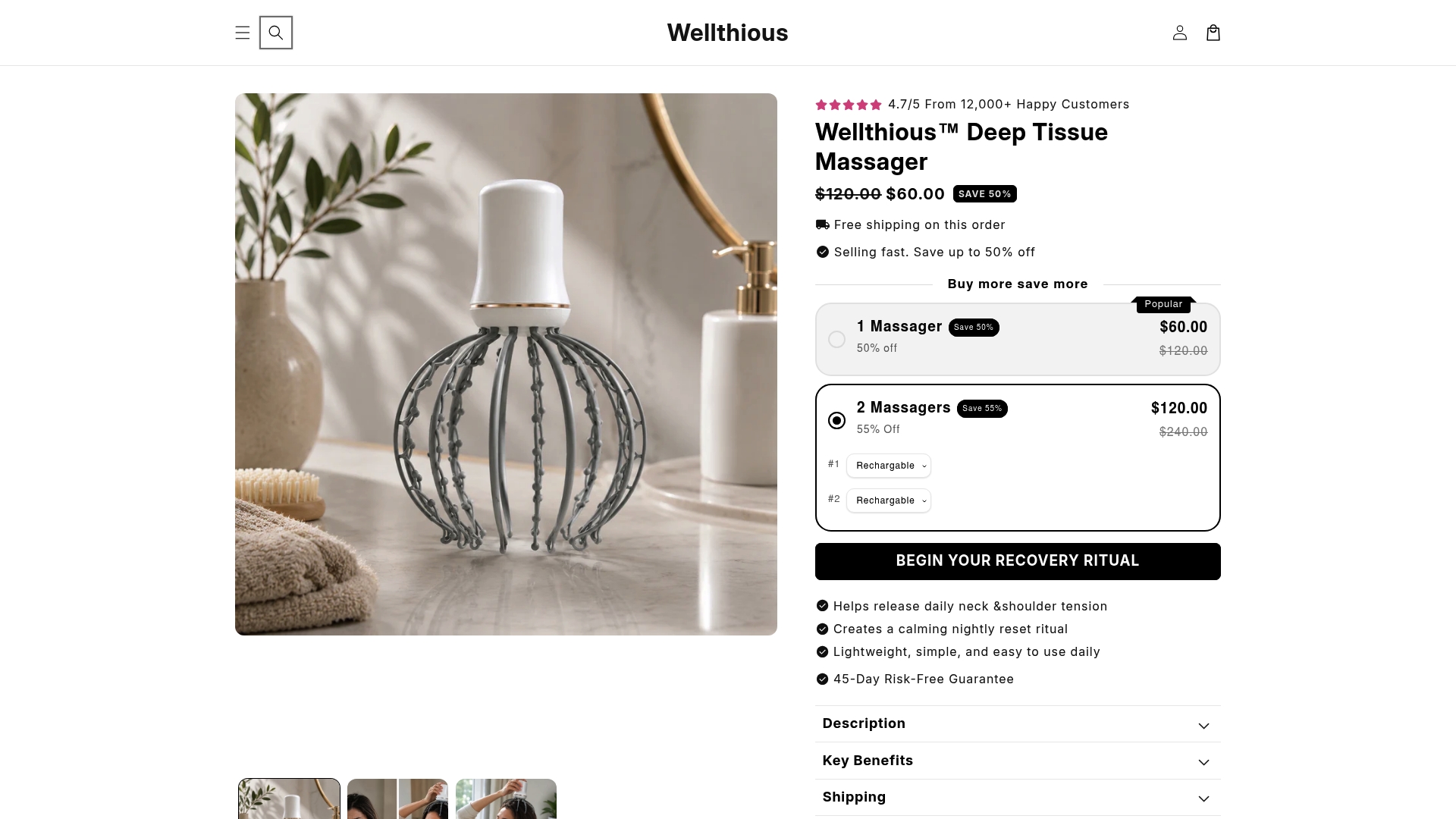
The Wellthious™ Reset Ritual Scalp Massager delivers targeted vibration to the scalp and neck, supporting the same blood flow changes that manual temple massage produces. The Wellthious™ Deep Tissue Massager vibrations reach deeper into the neck and shoulder muscles that drive most tension headaches. Both tools are designed to complement the hydration, movement, mindfulness habits, good posture, and quality sleep covered in this article. Browse the full range of Wellthious wellness products and find the tools that fit your self-care routine.
FAQ
What is the fastest natural way to relieve a tension headache?
Temple massage is the fastest evidence-based option. Applying gentle circular pressure to the temples alters cranial blood flow and reduces headache intensity within minutes, according to Cleveland Clinic guidance.
How much water should I drink to prevent tension headaches?
Men should aim for approximately 104 ounces per day and women for approximately 73 ounces. Spreading intake evenly throughout the day prevents the dehydration that triggers tension headaches.
Do breathing exercises actually help with head tension?
Yes. Techniques like diaphragmatic breathing and progressive muscle relaxation helps in lowering cortisol and release muscle tightness in the neck and scalp. Mayo Clinic research claims that these methods work best with daily practice, not just during headache episodes.
How is a tension headache different from a migraine?
A tension headache typically feels like a dull, pressing band of pressure around the head without nausea or light sensitivity. Migraines usually involve throbbing pain on one side, nausea, and sensitivity to light or sound. If you are unsure which type you experience, consult a healthcare provider for a proper assessment.
Can poor posture really cause head tension?
Yes. Sitting with forward head posture or rounded shoulders places sustained strain on the neck and upper back muscles. That strain travels upward and creates the band-like pressure characteristic of tension headaches. Correcting seated alignment and taking hourly movement breaks directly reduces this risk.
Can a scalp massage become part of a daily wellness routine?
Yes. Many people include a short scalp massage alongside stretching, breathing exercises, or reading as part of their evening routine. Used consistently, it can become a simple way to unwind and transition from a busy day into rest.